The Whispering Skull, by Jonathan Stroud

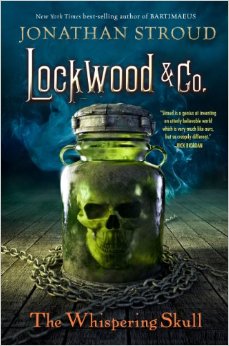
skullThe adventures continue for Lockwood & Co, related to the teaser at the end of The Screaming Staircase. It involves murder, theft, old uncontained relics, a black market ring, and leaping off buildings. I don’t want to say anything more than that, and give away spoilers for either book.

This is a really fun series, and perfect for RIP. I’m hoping it stays a series, rather than a trilogy, especially as there doesn’t yet seem to be any particular arc-story that would connect the books so far. I’d rather just keep going with the adventures of Lockwood & Co. for as long as Stroud wants to write them. They read as episodic – each a closed story with a teaser for the next – rather than pieces of a larger story. I like that, and would love to just keep going with these characters.

The Whispering Skull wasn’t quite as good as The Screaming Staircase for me, but I think that’s less to do with the book itself and more to do with media. I listened to the audio of The Screaming Staircase, and it was fantastic. Listening made the story incredibly creepy in places, goosebumps running up and down my arms. I really wanted to get this second book in audio as well, but my new library system doesn’t own an audio copy. I didn’t get that same creeped-out feeling reading in print, but I could tell that if I’d listened to it, I would have. I can’t say how the books would compare if I’d listened to both.

I don’t want to sound negative about The Whispering Skull, however. It was definitely a solid book, with lots of fun twists and creepy moments. My favorite part was that the villain wasn’t such a black-and-white villain, but a victim as well. That always makes me look on a book more favorably, and given that this is a middle-grade book, I’m particularly impressed. I’m also very much looking forward to the next book – the teaser was excellent!

Reread via audio in May 2016: Audio narrator is Katie Lyons, who does a good job, though it was strange to have different voices for each of the characters than in the last audiobook.

Posted in 2014, 2016, Children's, Prose | Tagged , , , , , | 4 Comments

Top Ten Difficult Reads

This is an interesting topic. I wasn’t quite sure how I should define “difficult.” There are a lot of reasons a book might be difficult to read. After some debate, I decided to include several different kinds of difficulty here.

adaReadability: There are just some books that are just plain difficult to read, as in difficult to understand and comprehend the words you see with your eyes, what the author wants you to see. I’ve read a few of those over the years.

1. Ada, or Ardor: A Family Chronicle by Vladimir Nabokov – Actually, I think I’ll include just about all of Nabokov novels. He kinda tries to be difficult on purpose sometimes, I think. This one and Pale Fire were the most difficult for me, hands down.

2. Two Treatices of Government by John Locke – Okay, so this isn’t pleasure reading, but I’ve literally tried to read this particular political/philosophical essay about a dozen times in my life and can’t understand a frickin’ word! I had to include it on the list. It’s one read I have yet to conquer.

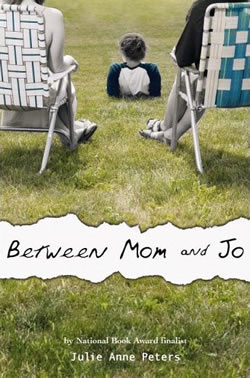
Between_Mom_and_JoEmotional: Some books just rip you to shreds when you read them. Having your heart and stomach and soul chewed up and spat back out is never easy, no matter how much you love the book afterwards.

3. Between Mom and Jo by Julie Peters – Peters often shreds me into pieces when I read her, but none more than this book. I’ve never ever cried at any book more than I did at this one. I was left hollow and empty afterwards. In a good way.

4. The Abstinence Teacher by Tom Perotta – I can’t begin to describe just how angry this book made me, not at it, but at the idea of abstinence education in general (as a replacement for real sex education). I don’t believe I’ve ever been so angry after reading a book as I was with this one.

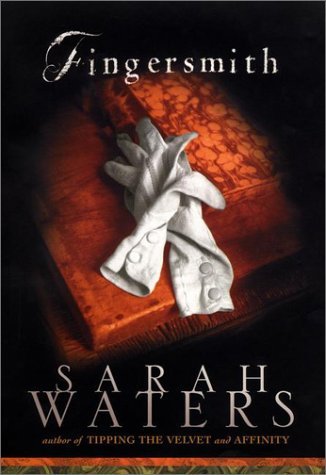
fingersmithGuilt: Worst thing in the world – reading a book that someone has given you, or recommended to you specifically, or reading a universally beloved book…and really not liking it. These sorts of books are the ones I wish wholeheartedly that I’d never picked up at all! It’s so much more difficult to dislike a book everyone else loves, or that someone really thought that you, personally, would love. 😦

5. The Time Traveler’s Wife by Audrey Niffenegger – I wanted to like it. I really did…

6. Fingersmith by Sarah Waters – Really. Really I tried. I did. I like other books by Sarah Waters…

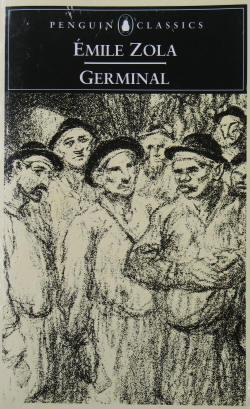
GerminalPortent: There are some books that you just know, from page one, that nothing’s going to turn out well. You almost don’t want to read it, with how palpable that stress is from the beginning.

7. Germinal by Émile Zola – I nearly stopped reading this before I finished it, despite how good it was. It was that stressful.

8. The Awakening by Kate Chopin – This is another one of those books where I was practically in tears only a few pages in, before anything had even happened yet. I could just feel the pain coming…

ruinrisingukDisappointment: This might be the worst. Reading a book that you love love love and then getting to the end only to have something completely break the book.

9. Ruin and Rising by Leigh Bardugo – GAH!!!!!!!!!! Why why why??? Maybe it’ll feel better on reread…if I can gather my courage to reread it…

10. Market Day by James Sturm – This was all set to become one of my favorite graphic novels until it…degraded. Ick. I still get a bad taste in my mouth when I think of this one.


topten

Top Ten Tuesday is hosted by The Broke and the Bookish.

Posted in Book Talk | Tagged | 6 Comments

Sunday Coffee – A Rating History

IMG_8061Last week in my Sunday Coffee post, I talked about how my impressions of books tend to change over time. I wanted to sort of continue that talk, specifically with regards to ratings.

Ratings are a really easy way to blanket-classify one’s feelings for a book. They can be given on any sort of scale (stars, caterpillars, mustaches…) and at any range of level (half-stars, quarter stars…). Everyone that uses them seems to have their own system for them. When they’re used, it’s easy to see at a glance what a person thinks of a book. Right?

I have a complicated history with ratings. Back when I first started reviewing books (2008), I never even thought about ratings. Then, getting to know other book bloggers, I saw ratings everywhere, and I wanted them, too. (No, I have no idea why. It just seemed exciting at the time.) When I moved away from my group blog and to my own personal book blog, I began using them. I got a Goodreads account, and put my ratings there as well – though I was annoyed that it didn’t allow half-stars.

While others debated the rating process, I was happy to keep going with my personal system – until late 2009, when I reviewed Born on a Blue Day. For the first time, a book seemed impossible to rate. Should I rate on technical skill? Subject? Personal enjoyment? Some combination? How could I give a star-rating to a book that was essentially a person’s viewpoint of their own life and neurological issues? I wrote a Sunday Salon post about it not long afterwards (sadly lost now), and sometime after, stopped rating books on my blog (though not on Goodreads).

For the next few years, I rated on Goodreads but not on my blog. When I created my private book journal, I added the ratings back in, along with a page to sort books by rating (the same way I have pages to sort by author and title). I got annoyed periodically when my initial star-rating would change, and I’d have to rearrange my pages and tags, but mostly, I just rated the books automatically. When I decided to go public again, I didn’t include ratings here because I was uncomfortable blanket-classifying books as one-star or two-star books. For me, low ratings meant that I didn’t like the book or took issue with the book, but did that really mean the book was only worth one star? It felt mean/rude to make that statement, because it was just too simple. As I said above, everyone has their own way of rating, and “one-star” might mean something completely different to me than someone else who happens upon one of my “one-star” ratings.

As I’ve been transferring reviews from private to public, I’ve noticed, as I said last week, that my feelings for a book will often change over time. I might rate something low only to love the book over time, and vice versa. I initially gave The Cellist of Sarajevo five stars, because it really touched me when I first read it, but six months later, I could barely remember the book, and it faded to a just-okay three stars in my mind. The exact opposite happened with Never Let Me Go. Feelings for a book are very mutable, and thus ratings change over time. I wouldn’t want my ratings to reflect only my initial thoughts, but I also don’t want to go back and change them. So that’s another point against them.

Then there are those books that I’m very conflicted about. I read a book near the end of last year called Born of Illusion. (I’m not linking back to it because I’ve got the review password protected, as it’s less of a review and mostly a discussion of writing technique stuff I want to remember for my own writing.) I noted at the time that the writing was excellent, but at the same time, I felt no spark or connection to the book. That doesn’t mean someone else wouldn’t. I just didn’t. So do I give a higher rating, for it being well-executed, or a lower one, for my personal disconnect? Or somewhere in between, not really saying anything at all?

These are all things I’ve been thinking about lately. I’ve grown very uncomfortable with star-ratings for all these reasons. Uncomfortable enough that I’ve actually gone and cleared all my 900+ ratings from Goodreads. I have other ways to indicate my feelings about a book – reviews, tags – that are far more accurate and nuanced than a simple rating can ever be.

Posted in Book Talk | Tagged | 2 Comments

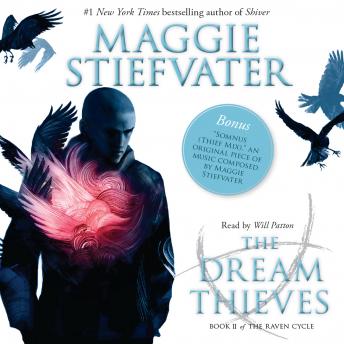
The Dream Thieves, by Maggie Stiefvater (audio)

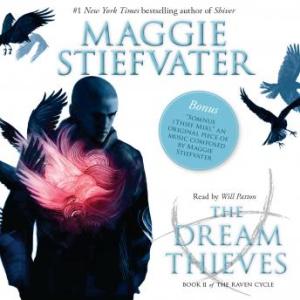
dreamthievesThis review will necessarily contain spoilers for the first book in the series, The Raven Boys. It will unnecessarily contain minor spoilers from The Dream Thieves.

Ronan Lynch has a secret. He can remove things from his dreams, taking them into reality. But his secrets go deeper than that, and they might just get him killed.

I loved this book. I loved it even more than The Raven Boys. And because I love it so much, in combination with a stupid headcold that I’m fighting, I’m not going to be terribly coherent here. So, instead of a traditional review, I’m just going to list the top five things I loved about this book.

1. Humor. Maggie Stiefvater is hilarious. I swear, I was laughing all the way through this book. There were so many good lines, such as:

Gansey appeared beside Blue in the doorway. He shook his empty bottle at her.

“Fair trade,” he told her in a way that indicated he had selected a fair-trade coffee beverage entirely so that he could tell Blue that he had selected a fair-trade coffee beverage so that she could tell him well done with your carbon footprint and all that jazz.

Blue said, “Better recycle that bottle.”

and

Blue was a fanciful, but sensible thing. Like a platypus, or one of those sandwiches that had been cut into circles for a fancy tea party.

and (re: the 10 of Swords tarot card)

The victim lay on his face, as most people did after being stuck with ten swords.

That second quote, about the platypus, had me laughing for a good five minutes. It was just so unexpected and random. I felt good the entire time I was listening to this audiobook. And my kids kept asking me why I was cracking up every ten minutes.

2. Characters. I discussed this already in my review of The Raven Boys, so I won’t go into it much. Let me just say that it was fantastic to revisit known characters and watch them grow as things happen to them. Every conversation, every moment, felt natural and real, like real people instead of characters. Nothing stilted or contrived at all. It was also very interesting to meet new characters, and to have them develop not at all how I would expect. The Gray Man was fascinating. His story’s climax…whoa. That’s all I’m going to say about that.

3. Slow love. Blue doesn’t want to love Gansey, even though she knows, through magic, that he must be her true love. She wants to love Adam. We can’t control where our feelings develop, though, and it’s been wonderful to watch how Blue’s feelings are changing against her will, slowly, painfully. I love that there is nothing sudden here, no instant falling in love. I love the way Blue and Gansey’s friendship develops over a long period of time, through experience and communication. I love that it’s hard for both of them. That scene, cheek to cheek, walking away…ohhhh. Agonizing and lovely all at once. Also to note: I love that this isn’t a love triangle setup, when it could easily be one.

4. Hard truths. When people are chronically abused and hurt, they don’t just magically turn out to be well-adjusted adults. Abuse messes people up. At the beginning of the series, we see Ronan, all anger and violence and fury, and we see Adam, all fatigue and worry and work. And yeah, Ronan has reasons to be angry. His father was murdered, and he’s not allowed to go home. But he was loved, and cared for, and that comes out even through his messed-up-ness. Adam, on the other hand, was physically abused, and no matter how hard he fights against the stigmas of abuse, the signs of it come out of him. Sudden violences, smothered or not. This is only one example. There are many. Hard truths. Stiefvater doesn’t run from them or water them down.

5. Family. For this point, I will simply leave you with my favorite quote of the book, which pretty much sums up how I feel about family, too:

For Blue, there was family – which had never been about blood relation at 300 Fox Way – and then there was everyone else. When the boys came to her house , they stopped being everyone else.

Now, can I please have Blue Lily, Lily Blue? Now? Please? *waits impatiently*

Performance: As an added bonus to my Top Five Things To Love About This Book, I need to mention the audiobook performance itself. This also made the book phenomenal for me. I wasn’t sure, when I began the audiobook of the first book, that I would like it. I’m not generally a fan of audiobooks performed in heavy southern accents. This one is an exception. It’s brilliant. I love the way Will Patton reads this. Now that I’ve finished these two books – and the third isn’t quite out yet, agh – I want to go back and reread them. To tell you just how much I love these audiobooks, I’ve rejected the idea of going back to reread in print, and will instead relisten to them. Actually, I’ve already begun another audiobook, but I’m interrupting it to go back to relisten. Yeah.

Posted in 2014, 2015, 2017, Prose, Young Adult | Tagged , , , , , , , , , , | 4 Comments

Top Ten Fall TBR Books

I have so many books that I want to read right now! Most of my fall TBR is made up of either RIP-related books or brand new books by some of my favorite authors (either just out or almost out). In no particular order:

1. Shadow of Night by Deborah Harkness (audio) – I admit, I’m on the fence about this one a little. I enjoyed but didn’t completely love A Discovery of Witches, though that might have been because I listened to it nonstop during a three-day cross-country drive. I’m definitely looking forward to taking this one a bit more slowly, while out walking in the gorgeous fall weather and scenery around here!

208210432. The Secret Place by Tana French (audio) – I have to listen to Tana French on audio. I’ve listened to all her books on audio, and I just like them better that way. Each one has gotten progressively better, and I cannot wait until the library finally delivers this audiobook to me!!!

3. Afterworlds by Scott Westerfeld – It’s been way too long since I last had a brand new Westerfeld book. Waaaaaay too long. Will gobble this one up asap!

4. Rooms by Lauren Oliver – Oliver’s books have been hit or miss for me, but this one looks sooooo good. Can’t wait to get this one from the library. Sounds like a perfect little creepy RIP book!

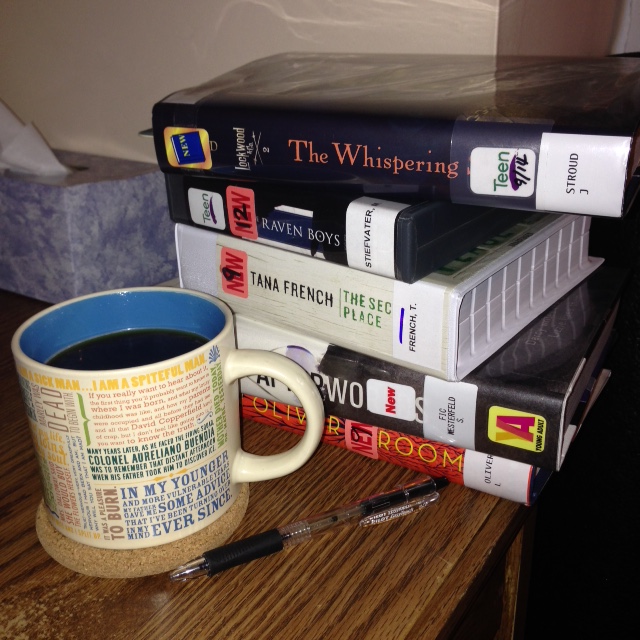
5. The Whispering Skull by Jonathan Stroud – I listened to the first book in this series, The Screaming Staircase, back in June. It was so creepy I had chills for most of the listening, and I knew I had to get my hands on Book 2 for RIP. Sadly, there doesn’t seem to be an audio version available. Boo. I’ll have to read it in print instead, rather than waiting for the audio to come out!

3593756. Nightwatch by Sergei Lukyanenko – I honestly have no idea what this one is about. All I know is that Stephanie pushed it into my hands on one of our last outings together in San Antonio, and Memory confirms that it’s amazing, and it sounds like a great RIP book. Definitely on the list for this fall!

7. The Queen of the Tearling by Erika Johansen (audio) – This one will wait until after RIP, but it’s pretty much immediately in the queue as of November 1st. I’ve been waiting to get my hands on this one forever!

8. The Dream Thieves by Maggie Stiefvater (audio) – I admit, I’m right in the middle of listening to this one right now, so it’s only kinda TBR. I’m sure that the moment I finish it, the next book in the series (Blue Lily, Lily Blue) will go immediately on the TBR. Oh, who am I kidding? It’s already there! And it comes out near the end of October, so I hope I can get my hands on it while it’s still fall!

9. The Retribution of Mara Dyer by Michelle Hodkin – Love-hate relationship with this series, but that definitely won’t stop me from getting my hands on Retribution as soon as it’s released in November!

10. The Paying Guests by Sarah Waters – I’m on the fence about Sarah Waters. Read two books, loved one, didn’t at all like the other. I’ve heard this is much like the one I loved, though, so I’m hoping it’s a good one. Unfortunately, I’m WAY back in the hold line at the library, so I might not make it to this one during the fall.

topten

Top Ten Tuesday is hosted by The Broke and the Bookish.

Posted in Book Talk | Tagged | 2 Comments

Sunday Coffee – First Impressions

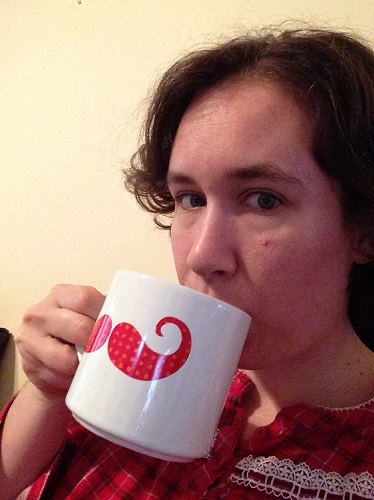
IMG_7979(My pjs and mustache kinda match this morning…)

It has been a really busy week, and a hard one, fraught with insomnia and so many school functions to attend that I had little time to recover. In my down moments – what few they were – I didn’t have a lot of mental energy to put into other projects, so I spend that time working on the blog this week. I had an interesting experience doing so.

Back in 2010, I read and reviewed Devilish by Maureen Johnson. I’ve read seven novels by Johnson since discovering her in 2009, and Devilish ranks up among my favorites, perhaps my very favorite. It’s the only one I own, after seeing it recently at a library book sale and snatching it up immediately. My review from 2010, however, is very unsure. I read back through it as I transferred it from my private book journal to this blog, and the whole time, I kept wondering what the heck I’d been thinking. This book is so much fun! Did that just not come out in my review?

Then I got to the end, where I’d tacked on a note when I created my private book journal in spring 2012, almost two years after reading Devilish. “Note: After time passed, this came to be one of my favorite Maureen Johnson books, the one that stuck around most in my memory.” Okay. So I wasn’t crazy. I simply hadn’t liked the book as much when I first read it as I do now.

This isn’t terribly uncommon, I don’t think. (Not specifically with this book, but books in general.) I remember being kinda meh about Never Let Me Go when I first read it, but within six months, it grew into an all-time favorite that I still thought about all the time. There’s the opposite, too, where a book starts as something you enjoy but over time either becomes distasteful or fades away in your mind. I’ve had quite a few reviews I’ve read over as I transfer them, praising a book I either barely remember or remember negatively. Other than a periodic note when my feelings have drastically changed (both Devilish and Never Let Me Go have them, added years ago, not now), I’ve forced myself not to modify my original reviews in any way. (Well, other than correcting obvious typos. Because there’s that.)

Reviews are my first impressions of a book. Reviews and “ratings” (which is an entirely different topic for a different Sunday Coffee) can only say so much, unless added to or changed over time, and I hesitate to make those changes. I like having a book journal to record those first impressions, so that I don’t forget a book or the initial experience of reading it. Sometimes, though, I wish to go back and revisit a book, and then update my review, or at least add on “revisited” thoughts. (I actually have done this a couple times over the years, like with We by Yevgeny Zamyatin.)

You’d think it would be simple: like a book, don’t like a book. But it’s not. It speaks to how powerful a book can be, how strongly it can affect someone, when impressions and feelings over time can be altered, even without ever revisiting said book.

Posted in Book Talk | Tagged | 9 Comments

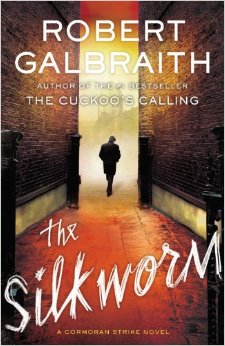
The Silkworm, by Robert Galbraith

51zWmD6wlJL._SY344_BO1,204,203,200_In this second Cormoran Strike novel, Strike takes on a case to find a missing husband. Owen Quine is an eccentric two-bit author whose latest work was rejected right before he disappeared. His wife believes he’s gone off in a huff – something not unusual for Quine – until Strike discovers his decaying, mutilated body. Now, he has to unravel the clues left in the unpublished novel to find Quine’s killer before the police charge his wife with the murder.

I enjoyed The Cuckoo’s Calling, the first Cormoran Strike novel, when I read it last year. It was not a novel I would have picked up on its own, being as I’m not really a mystery reader. I only picked it up after discovering that Galbraith was JK Rowling’s pen name. Because I enjoyed the first novel so much, however, I’m happy to say that I picked up The Silkworm for itself, and not for its author. This is exactly the right time of year (RIP!) to read a mystery, and a macabre mystery at that.

Honestly, I can’t say I enjoyed The Silkworm quite as much as its predecessor. The Cuckoo’s Calling wasn’t perfect – I remember being annoyed by the extra-long explanation of hows, whens and whys at the end of the book, for example – but I enjoyed the story and characters a lot. The Silkworm felt, for me, a bit stilted for the first half of the novel. There were a lot of conversations that didn’t quite feel real, particularly when Strike tried to subtly interrogate potential suspects and witnesses. I felt like the people he spoke to gave far more away than they would have in reality, particularly those in the police force. In addition, the sudden point of view shifts within the narrative (sometimes within a single paragraph) were jarring, and I often found myself trying to figure out whose thoughts/feelings were being explored.

The second half of the book picked up quickly, however. The interrogations became more natural, and I got used to the point of view switches (mostly). The case itself was fascinating, and I never had any idea who would end up being the killer. I loved the shark motif, particularly the way it circled back at the end. The various relationships in the book (romantic and otherwise) developed nicely, and left me looking forward to spending more time with these characters in the future. Also, I was impressed by the solid, straightforward way that transgendered issues were handled both in the text, and by the characters themselves. Lastly, there was no long expository explanation at the end of the book this time (yay!).

In the end, despite a rocky start for me, I really enjoyed the novel. I will definitely be keeping my eye out for further Strike novels.

Reread via audio in May 2017: Robert Glenister makes this book excellent. It no longer felt stilted, and all POV shifts sounded natural.

Posted in 2014, 2017, Adult, Prose | Tagged , , , | 1 Comment

Sunday Coffee – Reflections on 2009

All of my reviews from 2009, excepting a handful that have been lost since their original posting, are now transferred to this blog.

That was a big year for me in blogging. I only started blogging, then book blogging, in 2008, and only discovered the world of book blogs in the fall that year. 2009 marked a big turning point for me in blogging. It was the year I left group blogging, and started the original Zen Leaf. It was the year I joined 25 – 25!!! – reading challenges, and designed my own challenge (GLBT Reading Challenge) for 2010. It was the year I read 101 books by the end of June, and only slightly slowed my progress in the second half of the year, ending at 184 books. It was the first year I participated in Readathon and NaNoWriMo, both of which I loved. The year also marked a great reading shift for me, with the discovery of modern YA and the graphic novel medium.

Looking back over that year through reviews has been fun. I was a book blog child, delighted by new discoveries and new toys and new friends. When I think about all the years I’ve been reviewing books, 2009 stands out as The Ultimate Awesome Year, in addition to being The Year I Went Book-Crazy. Sure, there were times when I felt bogged down by challenge obligations, or when I read too fast, or when I felt guilty for not liking universally-beloved books. Mostly, though, the year was wonderful, and I remember it with a lot of fondness. Great books, great words, great friends.

Some of my favorites from 2009:

Posted in Book Talk | Tagged | 1 Comment

Love is Hell, by Multiple Authors

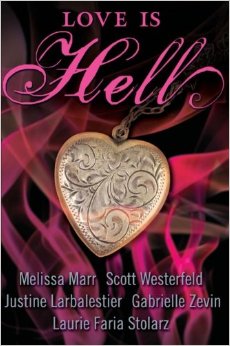
51u6qK9GPJL._SY344_BO1,204,203,200_Love is Hell is a collection of five silly-spooky love stories (titles below) by Melissa Marr, Scott Westerfeld, Justine Larbalestier, Gabrielle Zevin, and Laurie Faria Stolarz. Westerfeld is one of my favorite YA authors, and I’ve enjoyed books by all five of these authors in the past, so I knew I had to pick this one up. I’m not generally a fan of short story collections, simply because it feels like reading lots of mini-books, and my brain gets tired when switching so quickly. This was only five, though, and I split the reading up over several days, so it worked for me.

Each of the stories is about love, with a paranormal or supernatural bent. The stories range from fairy folklore to ghost story to dystopia. Exactly as I would have expected, my favorite was Westerfeld’s. Of the five, it felt most like a complete story, rather than a short sketch of a full novel’s idea. While I enjoyed the others, they could be a bit jarring in how fast characters went from “you’re a stranger” to “you’re the love of my life.” They were fantastic ideas, but I think I would have preferred them in a slightly longer format. Westerfeld’s piece felt more like a short story that could be expanded but didn’t need to be.

Still, that’s not to say this wasn’t fun to read! It made for great cold-front reading, wrapped in a shawl and sipping at hot coffee. Each of the stories was different from the others in feel and content, making it the perfect kind of story collection to read. I remember them all individually and distinctly, rather than having them run together as has happened when I’ve read other story collections. Each story had very vivid images that I imagine will stay with me for some time.

ripnineperilshort

I wasn’t intending to participating in Peril of the Short Story, as I don’t read many of them, but between this book and the collection of Poe’s stories I have sitting on my desk, I think I will! This collection was a fun way to start.

Stories:
“Sleeping with the Spirit” – Stolarz
“Stupid Perfect World” – Westerfeld
“Thinner Than Water” – Larbalestier
“Fan Fictions” – Zevin
“Love Struck” – Marr

Posted in 2014, Prose, Young Adult | Tagged , , | 1 Comment

The Raven Boys by Maggie Stiefvater (audio)

ravenboysBlue Sargent lives in a family of psychics, though she has no (usable) magic herself. She’s been told since early childhood that if she kisses her true love, he will die, and therefore, she’s decided never to fall in love. Her fate, however, can not be outrun, and on St. Mark’s Day in her sixteenth year, Blue sees one of the soon-to-be dead: an Aglionby student, a Raven Boy, named Gansey. She shouldn’t see the dead – she has no magic – and the fact that she sees him means that she’s his true love, or she’ll be the one to kill him. Or both.

A couple years ago, I tried to read this book. The premise was interesting, and I loved that first creepy scene in the abandoned churchyard on St. Mark’s Day. Then I got to Chapter 2, where we meet Gansey and several of his friends, and I lost interest completely. They seemed completely typical of YA stereotyped male protagonists, and I didn’t want to spend any time on them. Recently, however, I heard Memory talking about how great this book is, this series is, and I thought hey, I might as well give it another chance during RIP season. And, because I’m generally more tolerant of books in audio format, I checked out the audiobook from my library.

So, so glad I did. Funny thing is, I got to Chapter 2 and had all those same thoughts about Gansey et al. But it was an audiobook, so I kept listening. (See? More tolerant.) After that moment, things got better. Much, much better. So much better, in fact, that I spent the better part of two days finding reasons to get up and walk, work, drive, whatever would allow me to keep listening.

Gansey, Ronan, Noah, and Adam grew into real people instead of just caricatures. Blue was fantastic, and watching her interact with these boys who came from a completely different world was priceless. (Especially the first time she and Gansey meet.) The paranormal parts were deliciously creepy, the twists caught me by surprise, and the story ended with enough closure to feel satisfied, but also enough left hanging to make me want to read more. Yes, I’ve already checked the next audiobook out from the library.

I think what I liked best about the book, though, is that it wasn’t just a ghost story. It touched on what it’s like to grow up in an abusive household and to know you’ll be homeless if you speak up. It discussed family and what truly makes up that word. It showed the agony of not knowing when something might go irrevocably wrong, after having lived through the nightmare once already.

Sometimes, Gansey felt like his life was made up of a dozen hours that he could never forget.

Stiefvater does all this without shoving any of the issues into your face. They are simply part of the fabric that makes up the characters’ lives, and in my opinion, that’s the very best way to approach heavy subjects. I was impressed, and now very much looking forward to The Dream Thieves.

Performance: This audiobook was read by Will Patton. Despite heavy dialectical accents – generally something I dislike in audiobooks – I enjoyed the performance and thought it was well done. Each character was distinct and recognizable, and I particularly liked the parts when more than one voice spoke at a time. Not something I’m used to in a single-cast audiobook.

Posted in 2014, 2015, 2017, Prose, Young Adult | Tagged , , , , , , , | 6 Comments