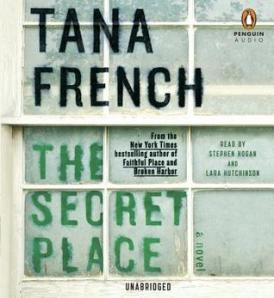
 Stephen Moran has been working cold cases since his appearance in Faithful Place. Holly Mackey, who has aged seven years since Faithful Place, comes to him with a postcard from a wall at her private girls’ school. The wall is known as “The Secret Place,” an anonymous place for girls to put up their secrets. This secret, however, is police-worthy. It references Chris Harper, a boy from the neighboring private boys’ school, who died the previous year, and asserts that the writer knows who killed him. Armed with this new lead, Moran works with murder squad detective Antoinette Conway, both to find a killer, and to possibly break his way into the murder squad itself.
The Secret Place is unlike other books in this series so far. It splits the narrative into two competing stories. There is Moran’s story, narrated in the audio version by Stephen Hogan, that goes through the detectives’ moves throughout the day that Holly brings in the postcard. The second story, narrated by Laura Hutchinson, starts nearly a year before Chris Harper’s death, following the movement of Holly and her three best friends up through and past the murder. The detectives figure out the tapestry that led up to the murder at the same time the reader experiences it through the eyes of four teenage girls. It was an interesting experience, and I think Tana French pulled it off well.
The Secret Place is the fifth book in the Dublin Murder Squad series, and it falls right in the middle for me in terms of enjoyment. I liked it more than the first two books (In the Woods and The Likeness), with which I had some issues, but not nearly as much as Faithful Place or Broken Harbor, books three and four. I certainly found myself listening to the audiobook almost obsessively – enough that Stephen Hogan’s Detective-Moran-voice entered my dreams and narrated them for me one night, ha! – but I didn’t feel the same pull as I had with the last two books. I’m not sure why there was that disconnect, but I just didn’t feel quite as compelled as with the last two books. The Secret Place felt slower.
Slower could have been beautiful – I like slow – except that it was coupled with one thing that I had conflicted feelings about. This goes into very minor spoiler territory, not related to the case in any way. Feel free to skip this next paragraph if you’d like.
The Dublin Murder Squad books, thus far, have been realistic books, in terms of genre. There haven’t been any, say, paranormal elements that have come into them. All of a sudden, though, this book strayed into psychic-like territory. The girls are suddenly making lights turn on and off by opening and closing their fists, making objects burn just with their anger, making things move without touching them. I kept waiting for there to be an explanation, but it never came. The closest it got was Holly mentally commenting, long after the girls stopped doing these things, that she could already tell that as an adult, she wouldn’t believe they’d really happened. And in a way, that makes sense. I remember back to high school, and the psychic-like things that I saw, things that make no logical sense in the world. If they have explanations, I have never figured them out. In that light, I actually really like this part of The Secret Place. At the same time, my adult sensibilities sort of rebel against them, and I find myself wanting that logical explanation, especially in a series that has stayed relentlessly realistic before. End minor spoiler.
Beyond the conflicted feelings, I enjoyed the book, just not as much as the last two. I will definitely keep listening to Tana French’s books as they appear, and I can’t wait to find out who the narrator will be for the next volume (I hope it’s Conway!).
Performance: Stephen Hogan’s performance was pretty convincing, obviously, if he was narrating my dreams one night. I found it much improved from his reading of Broken Harbor, and didn’t have trouble keeping his character-voices straight this time. Laura Hutchinson’s performance was fantastic, and I admit, her Irish accent was so thick I had a hard time adjusting to it, and had to listen to those sections a little slower (single speed instead of double speed). Both narrators managed to make the teenagers sound mostly like teenagers without sounding silly (as many narrators of teens do). It was a very solid audiobook overall.

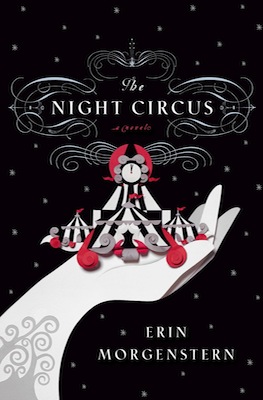 1. The Night Circus by Erin Morgenstern – Atmospheric circus-horror. Doesn’t get much better than this one.
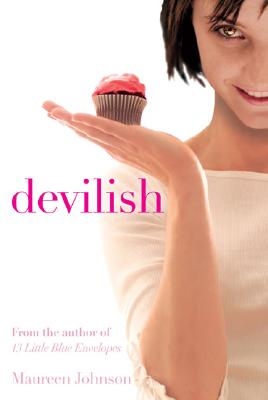 7. Devilish by Maureen Johnson – Demons, curses, and Catholic school. Yeah.