Alex and Me, by Irene Pepperberg

book_alex_me_rszI first heard about Alex, the African Grey Parrot, a couple years ago. Jason heard an article about him and his trainer, Irene Pepperberg, on NPR. The stuff they said Alex could do – counting, item recognition, etc – was amazing. I’m not a big animal or pet person, nor a big science person, but I recognized that the sorts of things Alex could do were out of the ordinary, and a great breakthrough in the study of communication and animal behavior. I stored the information away, and didn’t think about it again until this past fall, when Jason caught another NPR article talking about Alex’s death. Of course, Alex died the year before, in September of 2007, but I imagine the article came out because of the publication of this book, a memoir of sorts about Irene and Alex’s time together.

By the time Alex died, at age 31 and about 20 years prematurely, he had the communication skills of a toddler. He knew a bunch of words; recognized color, matter, shape, smaller/bigger, and same/different; knew numbers and had a rudimentary understanding of zero; understood some phonemes and was learning to put them together to form words; created his own words and combination words; and much more. All of his learnings were chronicled in this book, as well as his attitude through the years. He was like a toddler…a spoiled, bratty toddler, but they weren’t so concerned with discipline, of course. It was fun to hear stories.

There are a ton of stories in this book about Alex, but I’m only going to relate two of the more amazing things he did. The first involves the word “Banerry.” Irene and other trainers were trying to get Alex to use the word “apple.” They said it slowly and carefully – “Ap-ple.” But Alex wouldn’t have it. He refused to say the word. Then one day, he looked at that apple and said, “Banerry.” The trainers tried to get him to change it, but the longer they said, “Ap-ple,” the more insistent he got. “Ban-erry,” he said, then “Ban-err-eeee.” He was teaching the trainers to say his word, which was a cross between a banana and a cherry, fruits he was familiar with and could already say.

Another story. They were working on phonemes. One of the things with having to prove everything scientifically is that the experiment has to be repeated many times to show the subject has actually learned the knowledge. Alex used to get bored, repeating the things he’d already shown he knew. Once, when Irene wanted him to identify phonemes, he refused, instead saying “Want a nut” each time she asked the question. He got more insistent when she told him no, and eventually popped out with “Want a nut. Nnn…uh…tuh.” He spelled that word out without ever being taught. That was really amazing.

The book was a very fun read. The stories were amazing; I was continually stunned. I loved hearing about all the things Alex could do, and Pepperberg doesn’t write in overly scientific terms, so I didn’t get bogged down in stuff I didn’t understand. When she related how Alex died, I cried. It was very sad. Her last night with him, he was perfectly normal, and the last thing he said to her, as every night, was “You be good. I love you,” and “You’ll be in tomorrow?” The book didn’t say if they ever figured out why he died two decades before his expected lifespan. Whatever the cause, not only was it a great loss to the scientific community, but a loss to everyone who knew Alex.

Posted in 2009, Adult, Prose | Tagged | Leave a comment

Truth, by Robin Wasserman

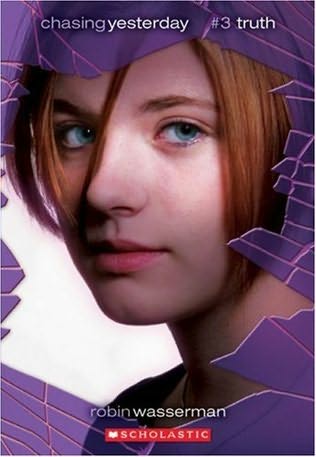
truthMy ILL came in, and I got to read the third installment of this little trilogy. And while it wraps up neatly, and all my questions are answered, I can’t say I enjoyed everything. It was okay. I mean, it was younger than I normally read, in the 8-10 or so age group, so it was a little simple for me. The ending was naturally a little sappy and predictable. I mean, these are late elementary school aged books. But after awhile, after three books, I just got a little tired.

I said back in my other two reviews on this series that this would have been better had the trilogy been just one book split into three parts. Of course, it would have been too long for its age group, I understand, but still, it really was like one long continuous story. More so than most series. That made it hard to read over a month or so of time, because it felt like I’d just put down the book and forgotten to pick it up for awhile, so it seemed to drag. The books themselves didn’t drag – I read each of them in a day – but the time lapse between them made me feel a little bored after awhile.

I have no real complaints with the books themselves. They’re interesting and fun in a thriller-type way. There’s no deep meaning, they’re light and fluffy, and they certainly carry you along very fast. Too fast for me, actually. I don’t like to be dragged in books. I know I’m in the minority here, but I like some semblance of control when I read. I want to be able to put the book down whenever I choose without being distracted and irritated until I pick it up again. I want it to be interesting enough to pick back up, sure, but I want to be master of the book. That’s the problem with being a control freak, haha!

But anyway, this was a fun little rollercoaster ride, and I’m not going to give away any plot details which might spoil earlier books. I’m not even going to try to work around spoilers this time, I’m simply not going to talk about plot points. I’m glad I read the series, but I’m also glad I’m done. And I think the second book was the best of the three.

Book 1: Awakening
Book 2: Betrayal

Posted in 2009, Children's, Prose | Tagged | Leave a comment

Protected: Austenland, by Shannon Hale

This content is password-protected. To view it, please enter the password below.

Posted in 2009, Adult, Prose | Tagged , | Enter your password to view comments.

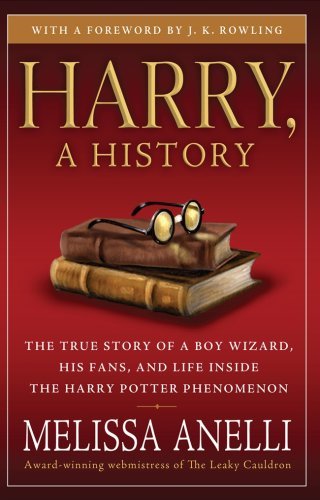
Harry, a History, by Melissa Anelli

harry_a_historyYou know you’re a Harry Potter dork when you read – with enjoyment – the end-notes and bibliography to a nonfiction book about the HP phenomenon. Oh yes. I am that dork.

I received Harry, a History – appropriately named, as my eldest son points out, like the fictional Hogwarts, a History – from my sister-in-law, Tenille. The author, Melissa Anelli, is the webmistress for The Leaky Cauldron, a mainstay in HP websites. I credit (or blame) Melissa, along with Emerson Spartz of MuggleNet, almost solely for my Harry Potter obsession. Technically, Tenille, my husband, and my life circumstances in 2005 all contributed to the obsession, but really, the root cause lies, in my opinion, with Melissa and Emerson.

See, I’d always refused to read the HP series. I knew next to nothing about it, just that it was about a boy who finds out he’s a wizard and goes to school to learn magic. I knew it was extremely popular, and I’ve never done well with uber-popular things. It sounded lame, and I refused to read it. But then the sixth book came out, summer of 2005. Tenille was home for the summer, and she pestered Jason to read the series (he’d always refused to, too). When he gave in and came home with an armful of HP books, I groaned and knew it was time for me to give in, too.

Couched in rural Wisconsin, I somehow managed to never hear a single spoiler about the series. I was as pure as a first time reader when #1 came out. I began reading Sorcerer’s Stone and immediately complained. I did not go into it with an open mind. The writing was awful, I complained; see, I knew I wouldn’t like this. It didn’t take long for me to slip into the wizarding world, though, and soon I was rushing through all six books as fast as I could. Over the next month and a half, I was immersed in HP land.

That would have been the end of it, really. I had no plans to read the books more than once, even though I liked them. I spent a couple restless nights after the end of book six, trying to reconcile myself to the events at the end, until I came up with a reasonable explanation in a dream one night that made me feel much better (and which turned out, two years later, to be 95% accurate when Deathly Hallows came out). After I became reconciled, it was over.

And then Jason came home from work one day, and said, “Did you know there are people online who are Harry Potter experts?”

He showed me the Leaky Cauldron and MuggleNet. I saw the recent interview between Melissa and Emerson and J.K. Rowling. And somehow – probably due to my stress from selling a house, living with my in-laws, and soon moving across the country to Texas – I jumped at the information. I decided I would also become a Harry Potter expert. I had no designs to one day meet Ms. Rowling or anything. I just needed something to obsess over in order to deal with the many stresses that were on me between August ’05 and May ’06. And so I read. I bought my own copies of the books – the only books I owned that weren’t packed and in a storage shed for 6 months – and read them over and over.

Between July and May, I read the first six books 15 times each. Since then, I’ve lost count, but know I’m somewhere around 25 readings for each of them, and about 7-8 for the last book. Every time I get bored or stressed or nostalgic, I go back to the series, usually at least twice a year. I’ve become a walking Potter encyclopedia. I have huge chunks of the books memorized, word for word. I use the books as a grammar check if I come across something I’m unsure of when writing. I have friends who come to me if they need to know anything Potter. I never did become an expert like Melissa or Emerson – their expertise extends outside the realm of the books alone – but on the books themselves, I know tons.

Which is why getting Harry, a History from my sister-in-law was so much fun. I loved this book. I learned so many things about the Potter world that I never knew before. Here’s a sampling of the stuff I discovered:

1) How/why the New York Times Bestseller List split into multiple lists.

2) The real story of how J.K. Rowling came up with Harry Potter. Two stories are commonly bandied about on this subject, and now I know which is real.

3) The correct pronunciation of Rowling (like “bowling” – I’m going to have a hard time remembering that…).

4) Wizard Rock. I’d heard of this before, but didn’t realize how huge a phenomenon it was. Thanks to MySpace, I’ve now heard lots of wizarding songs.

5) The “shipping” wars. It’s amazing that a war existed on who would end up with Hermione – Harry or Ron. I suppose because I’d read through book 6 the first time, I already knew, and thus was never bothered by the issue.

6) Censorship. I dare anyone who has actually read the books to say they reinforce pagan values rather than Christian ones. Sometimes overtly Christian ones.

7) Chinese unauthorized versions of HP, with titles like Harry Potter and Leopard-Walk-Up-to-Dragon. The excerpts from these are hysterically funny. I wish they were published in English for the pure humor value.

8) Harry Potter midnight release parties. These make my pre-Potter party before Deathly Hallows look really lame.

There is so much more in this book, and Melissa’s enthusiasm for the Harry Potter world is catching. I want to thank her for her dedication to the books and for turning me into the Potter dork that I am. I highly recommend this book for any and all Harry Potter fans. Now, I’m itching to go to LeakyCon 2009 in Boston in May, but sincerely doubt I’ll be able to afford it. Grr.

Posted in 2009, Adult, Prose | Tagged , , , | 3 Comments

Story of a Girl, by Sara Zarr

Story_of_a_girlPersonally, I didn’t enjoy this book. The story could have been interesting, but the narrative put me off. It’s told first person, and the whole thing sounded like an imitation of teenagers speaking rather than an authentic voice. Now, to quantify my opinion, I grew up in a part of San Antonio where many people were having sex by the time they were thirteen, gangs and drugs were everywhere, violence was a serious problem, gunshots erupted every night in the neighborhood, most people had failed at least a grade or two, dropouts and teen pregnancies were in the top ratings in the country, and there were separate English and Reading classes in middle school because our test scores were soooo bad. In essence, I grew up in the same sort of place as the narrator. I grew up listening to the sorts of things that people said, and I remember, very well, what it was like to be a teenager. And if I’d have read this, as a teenager, my opinion would have been to scoff and say, They really think we talk and act like that? It didn’t feel real. The emotions were genuine, but the voice was not. Not in my eyes, anyway.

To be fair, I admit this is probably one of the most difficult voices in the world to tackle. To sound authentically wayward-teen is next to impossible. But when writing a book from this particular perspective, voice is key, and it just didn’t sit well with me.

That, and while the book was meant to be YA, it felt more like a book written for parents of wayward children, to help parents understand the world their children live in. Which is a good thing, sure, but then I wonder why it was written to be YA, you know? Does this book really help teenagers? Maybe. I don’t know. I know it wouldn’t have helped me or the majority of people I knew.

The ending was also too neat for my tastes.

I always feel bad giving a negative review of a book by a modern author. I know a lot of people would like this book. Part of my objection is just that it didn’t feel like an accurate portrayal of a world I know all too well. Someone with a different background than mine might find this eyeopening, stunning, and a great window into that world. It’s not terrible. It just didn’t appeal to me.

Posted in 2009, Prose, Young Adult | Leave a comment

The Eyre Affair, by Jasper Fforde

eyreI heartily agree that something odd is going on; something I can’t possibly explain. The barrier between myself and Rochester has softened.
–Thursday Next

This is a really odd book. Delightful, but odd. It’s alternate history, and the narrator, Thursday Next, lives in 1985 in a world where time travel is common, the dodo bird has been genetically resurrected, and literature is taken just as seriously as war. There are 4000 “John Miltons” in the phone book in London; the Baconians are presented like religious fanatics that go door to door with pamphlets, trying to convince people Francis Bacon really did write Shakespeare’s plays; and everyone NOT named after a poet seems to be named in pun (Paige Turner, Braxton Hicks, Jack Schitt).

Thursday Next works for the secret police, SpecOps, in a department called LiteraTecs. For the most part, they protect literature from theft, plagiarism, and impersonation. Thursday’s life gets much more interesting, though, when she is called in to help capture the seemingly indestructible villain Acheron Hades. Hades is stealing original manuscripts and entering them in order to kidnap characters. He starts small, with a minor character from Dickens’ Martin Chuzzlewit, but soon captures Jane Eyre herself to hold for ransom. Thursday, who has a decided interest in Jane Eyre owing to the fact that she’s entered the book by accident on occasion and once Mr. Rochester jumped out of the book in order to save her life, vows to set things right.

I don’t want to say any more than that and give away spoilers. This was a really funny laugh-out-loud sort of book, but at the same time, a thrilling literary adventure. I loved all the literary references, everything from the description of Blanche Ingram as “a sort of nineteenth-century bimbo” to the “bookworm” maggots that got genetically rewired and have been dubbed “HyperBookwormDoublePlusGood.” Also, I really love Jane Eyre, it’s one of my favorite books, and Mr. Rochester (who has a big role in this book) is one of my favorite literary personalities, so it was fun to watch how the text was treated. Fforde really did have a good handle on the characters – Jane, Mr. Rochester, Mrs. Fairfax, Bertha, etc – and when they moved, spoke, and acted, it really felt like they were the same characters as in the original book, even when they were outside the events of Jane Eyre. That, I think, was the most impressive thing about The Eyre Affair. That, and the sheer volume of literary and historical interplay; I’m sure I missed at least half the references and jokes.

My only complaint would be that the book seems to take a long time to get started. The driving force of the plot doesn’t start until at least a third of the way through, though to be fair, everything leading up to it is so interesting that I wasn’t slowed in reading. There just seemed to be too much information and too many plotlines stuffed into the beginning of the book. I’m not sure all those sideplots were needed. Many of them weren’t important to this book, nor did they get resolved. There are, however, four (soon to be five) sequels to this book, and I imagine some of those unexplained moments/plots/etc will blossom in other books. I look forward to reading them.

Posted in 2009, Adult, Prose | Tagged , , , , | 3 Comments

Pride and Prejudice, by Jane Austen

pandpThis is my fourth Austen book, after Persuasion, Emma, and Sense and Sensibility, and it’s by far the best. I can see why Pride and Prejudice is considered her best work. It’s outstanding! Whereas it normally takes me a week or two to read an Austen book, this took me a grand total of three days, and today I neglected all my intended doings in order to read. I didn’t want to put it down, it carried me along so well. I can’t say the same for other books by her I’ve read.

As per usual with Austen, this is a set of love stories that get messed up, mixed up, and nearly destroyed, but of course end well. I don’t consider this a spoiler for anyone who’s ever been exposed to Austen in any fashion. She writes 19th century romances. The chic-lit of the early 1800s. In general, I haven’t been overly impressed. Amused, yes, but not blown away. I’ve liked the stories in an academic way, but not so much on a personal level. P&P was far more personal. The writing was less pedantic than her usual style, the characters were real rather than caricatured, and the pacing was excellent.

Besides being a love story, P&P is a social commentary. Both love stories are primarily opposed due to the uneven nature of the parties’ stations in life. The two women, Jane and Elizabeth, are of a lower class than their respective love interests, Bingley and Darcy. While Bingley has no trouble overcoming the class difference and seeing past Jane’s vulgar family, Darcy is repulsed by those same things. In his repulsion, he offends Elizabeth, and from the beginning, they are at odds. Both have – what else? – their pride and prejudices to overcome. I find it interesting, though, that it isn’t just the upper class virtues critiqued. Elizabeth’s faults are equally examined, and with no less fervor than Darcy’s.

Austen also expresses some very clear criticisms of the church in this book, through the obnoxious character of Mr. Collins, a clergyman and a cousin to Jane and Elizabeth. He is one of the most ridiculous Austen characters I’ve read, made more ridiculous by the fact that, to me, he feels like someone I might meet, rather than just a joke of Austen’s. Austen often writes joke characters – like Emma’s father, for example – that are funny but personality-less. Mr. Collins, on the other hand, is the sort of person I recognize from personal experience, and he makes me groan and laugh at the same time. But Austen doesn’t stop at making the clergyman obnoxious and silly. She goes a step further, and makes him the opposite of charitable, despite his claims. It happens so quick, in a letter he writes to Jane and Elizabeth’s father. He says:

You ought certainly to forgive them as a christian, but never to admit them in your sight, or allow their names to be mentioned in your hearing.

At which point, Mr. Bennet replies,

That is his notion of christian forgiveness!

And then goes on to other subjects. A single line, but a very crisp criticism to the hypocrisy Austen often took issue with in the church.

This will probably stay my favorite Austen book even after I finish reading the rest of her repertoire. I’m so glad I read it!

I do have to admit, I still like Mr. Rochester better than Mr. Darcy, though for all those in love with Darcy, I admit he is a rather lovable character.

Posted in 2009, Adult, Prose | Tagged , , | 4 Comments

Betrayal, by Robin Wasserman

betrayalSo, to begin 2009, I continued the saga of J.D., the girl who woke up from an explosion with amnesia at the beginning of part I. I don’t want to say too much about the plot, which might give away spoilers from the last book. Trying to strip it down to bare essentials, J.D. and her friend Daniel continue on a quest to figure out where she’s come from, who she is, what people want with her, and where this special ability she has comes from. J.D. wants answers. She learns a lot about herself and the strength inside her throughout this book. She begins to recognize the difference between who she’s been honed to be and who she wants to be. And she is determined to get the truth at all costs.

I liked this book a lot. It was fast, fun, and the character development was well done. There were questions left unanswered, so I’m sucked into part III of this trilogy, but enough were answered that I didn’t feel unsatisfied like after the first book. Unfortunately, my library doesn’t stock part III, so I’m having to go through InterLibrary Loan for this book, which might take a month or more. Grr. Maybe I should go hang out at B&N for a couple hours one weekend and just read it.

Book 1: Awakening

Posted in 2009, Children's, Prose | Tagged | 1 Comment

2008 in Books

Time for my end-of-year books-in-review post. It’s been a pretty amazing year for books. I’m not sure I’ve ever read as many as I did this year. I love having a place to put my book reviews!! Hopefully people aren’t too annoyed with my excess of reviews!

So, here is a wrap-up of what I’ve read this year:

Total books: 87
First-time reads: 72

Novels: 70 (Speculative: 31, Realistic: 39)
Nonfiction: 14
Collections: 3

Children’s and YA: 28

Classics: 27

In translation: 9

New to me authors: 44

Best book: Other than rereading my favorite, Possession, I’d have to pick The Grapes of Wrath. Some close seconds were The City of Ember, The Lost Stradivarius, Memoirs of a Geisha, and a couple of Lois Lowry books.

Worst book: Tough one. I’d have to say The Bookseller of Kabul, though Oracle Night and Don Quixote come close.

Most forgettable: I’d have to say The Lost Legends of New Jersey. I remember like three things about that book total.

Most surprising: 1) The Grapes of Wrath – I expected to hate it, I’ve always avoided it, but I ended up loving it and couldn’t stop reading. 2) The Jane Austen Book Club – once again, I expected to not like it too much, but found it engaging and added it to the rare modern fiction book I enjoyed. 3) Memoirs of a Geisha – I thought this one would be good, but didn’t expect it to be quite so wonderful! It blew me away.

Most disappointing: 1) Don Quixote – it’s so classic, I wanted to love it, and hated it. 2) The Bookseller of Kabul – I thought I’d learn something about Kabul culture, and instead it was an offensive, westernized attack; preying on the fears of our current time in order to sell lots of copies, grr. 3) American Gods – because for some weird reason, I really wanted to like Neil Gaiman. 4) The Handmaid’s Tale – because I usually love dystopian novels, and this could have been good.

Best book-related discovery: Lois Lowry. I thought I’d read some of her books when I was younger, but hadn’t. She’s great. I’m so glad I discovered her this year. I plan to read lots more by her.

Posted in Book Talk | Tagged | Leave a comment

Tethered, by Amy MacKinnon

tetheredI’m on the fence about this one. I finished it yesterday, and have been pondering it all day. I even re-skimmed it, trying to figure out my thoughts. I’m not sure still if I like it.

The book is part ghost story, part mystery, and part psychological drama. It’s told from the point of view of a neurotic, antisocial undertaker who doesn’t believe in the afterlife. She gets pulled into a mystery surrounding a child pornography ring, trying to rescue a little girl who often hangs out at the funeral parlor where she works. After awhile, though, the police stop believing that the little girl exists, and they start thinking of the kind and fatherly funeral home director as a suspect in the pornography ring. The undertaker, Clara, battles herself, wanting isolation and a complete disconnect from everyone, but at the same time, being drawn to Mike the cop and the little girl begging her for help.

Things I liked:
The book was well-written, without any quirks that irritated me. Clara’s backstory is fascinating. She grows up in an almost Carrie-like home, so it had that same Stephen King feel in parts. In the middle, the book starts to feel like Clara’s an unreliable narrator, prone to hallucinations and other neurosis, and that was completely fascinating. Many of the side characters – the funeral home director and his wife, the reverend and his mother, a couple of the cops, the little girls – were interesting and felt very real. I was surprised by the revelation about the little girl who hangs out in the funeral parlor.

Things I didn’t like:
I knew the true culprit almost from the beginning. In other words, solving the crime was too easy. I also couldn’t tell what the author’s intent was. It almost seemed as if she had multiple ideas and combined them rather than trimming. Clara isn’t a great narrator. She’s the sort of person who tries to be as invisible as possible, and in first person, I couldn’t really relate to her. Her personality and final relationship to Mike make no sense to me based on what I know about them. Lastly, it felt as if the author tries to make a point that the afterlife exists, ghosts exist, we can commune with the dead, and fortune telling is valid. I’d be okay with that, except that the message wasn’t really there until the very end, so it felt forced.

So I don’t know. I half liked the book, and half disliked it. This was really fairly neutral, I suppose.

As a warning for anyone else who might want to try it, it does deal a lot with death and the undertaking process. There are some graphic scenes involving dead bodies. A couple times I almost put the book down because they were a bit too much for me, but the story kept me going.

Posted in 2008, Adult, Prose | Tagged , | Leave a comment