Half of this insane year is over! Definitely not where I saw the year going when it began. I’d like to take a moment to recap where things are today compared to where I’d hoped they’d be on January 1st!
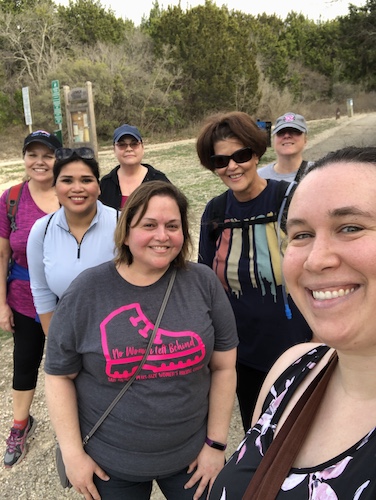
 To begin: Life in 2020 began on a high note. In December, I’d made three really big changes in my life that were snowballing into greater things. First, my family had downsized into a smaller and more affordable house, with our former house on the market to sell. Second, I’d joined a local hiking group focused on the motto “No woman left behind.” Third, I’d found short-term and longterm personal purpose in becoming a runner again and returning to school to eventually become a librarian.
The first 2.5 months of the year were amazing, and before covid came and shut everything down, I had every expectation of continuing an incredible and joyous year. On my birthday, Jason themed my gifts around the concept of adventure, and called this my year of adventure. I didn’t really pick a one-word for 2020 – and said that if I did, it would be “Run.” What I’ve realized, though, is that “Adventure” is a far more appropriate word for the year. Despite everything that has tried to make the last few months difficult, I’ve continued to approach 2020 with a passion for overcoming obstacles and breaking down the walls of my comfort zone. I’ve become an active participant in my own life again, even when that’s been really difficult. It has been rewarding.
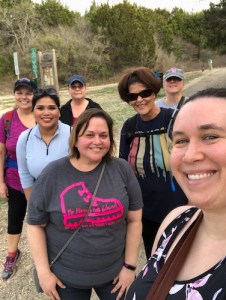 I’ve discovered many new-to-me places in this city, from restaurants to hiking spots. At times I’ve driven alone to those places, which is the number one most difficult thing for me to do with my agoraphobia. More recently, I’ve volunteered to become a host at some of these events, pushing my comfort zone boundaries even further. In doing this, I’ve met new people, made new friends, and formed wonderful memories.
For the first time in years, I’ve become vocal in person and online again. I’ve worn clothes that I’d normally eschew due to body-shame, and furthermore posted photos in them online. I’ve been transparent about body image and my own obesity, not just here on the blog, but in public forums online. I’ve run in public: in parks, at the gym, in neighborhoods, and in large-group settings like 5Ks. What I’ve discovered is an overwhelming amount of support from strangers, even online, and – with the exception of man-trolls who want to “get to know me better” – have had no negative remarks or experiences. I can’t tell you how overwhelmed I was when I joined a slow-runner community on Facebook and was immediately welcomed by hundreds of kind and positive people.
 The slow-runner community is not the only one I’ve joined. I also signed up with the Real Life Ghost Stories group on Facebook (listening to this podcast is also one of the new things I’ve done for the first time this year). At first, I just lurked there, maybe liking a post here or there. I’ve been quiet on social media for about six years now, since my family went through its difficult nomadic period and I retreated into myself. But after awhile, I left a comment or two. And then one of the members set up a Zoom chat with the podcast hosts and opened it up to the group. I nearly didn’t join, because agoraphobia sucks. But I did. I pushed myself past that boundary. And it meant chatting with a dozen or so really awesome people. I began commenting more. I began posting sometimes, too. I exchanged comments and stories with folks on instagram. All those walls I’d put up crumbled; all those boundaries started breaking down. I put myself out into the world…and the world accepted me regardless of all the faults and flaws I saw in myself.
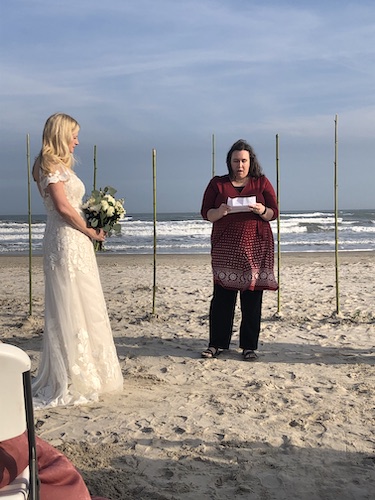
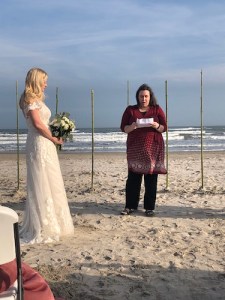 It’s not always easy, but I’ve worked hard all year. I gave blood for the first time. I stood up and spoke at my cousin’s wedding instead of declining her request out of fear. When I began to xeriscape my yard, I used my own design instead of bending to another’s. During a body-image-improvement course, I went through a process of changing how I thought – looking at the things I’ve done rather than what I’ve failed to do; filling my physical and virtual surroundings with images and items that bring me joy (and not just joy-in-nostalgia). And more. It has been half a year of discarding chains.
Sad Things of 2020
Not everything is happy, of course. I don’t want to focus on these things, but I need to include them, because they are the shadows that make the happy moments brighter.
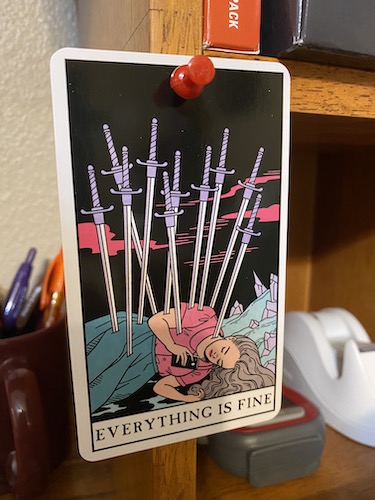
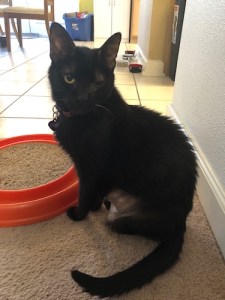 Ash got sick and has never gotten much better, and we don’t know how much longer he’s got (all indications point to cancer and/or liver failure). Covid came to town and quarantine began, and now despite our city’s best efforts, we’re in the middle of a major spike. Morrigan had to leave school in Kansas and finish here online. Ambrose and Laurence also had to finish the school year digitally, and Ambrose missed all the normal senior year/graduation milestones. Jason has had multiple illnesses and medical problems (very unusual for him). My extended family had a lot of medical problems, too, including one person who had covid (though thankfully recovered), one randomly catching c-diff, and one who had several strokes. My doctors ran a bunch of tests on me for inflammation/autoimmune antibodies, but when the results came back all weird, they just said, “well we have no idea, too bad.” Jason’s and my Planniversary trip (for our 20th anniversary last December) was canceled. Lockdown increased my agoraphobia and insomnia, and this newly-begun secondary lockdown is not helping. Extremely hot temps came to San Antonio much earlier than normal this year. My family had to split up, living in different states, due to covid.
Books of 2020
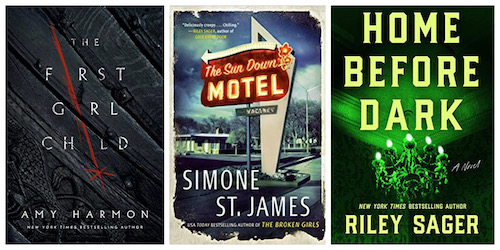
I’ve had a major book slump this year leading to only 17 books read so far. The good news is that of those 17, most have been wonderful. Favorites of the year include: The First Girl Child, The Sun Down Motel, and Home Before Dark. Also good news: At the end of June, nearly a dozen holds and e-holds at the library all came in at once, so it stands to reason that the second half of 2020 will have a lot more awesome books for me to talk about!
Goals
My goals for the year centered mostly on improving finances, improving health, and working toward an eventual career. My other big goal was related to writing, but that has been put on a WAY back burner and I’m not going to be focusing on that this year as far as I know.
Finances
As the year began, Jason and I had just downsized to a smaller, more affordable house, and we’d taken out a consolidation loan to pay off the massive credit card debt we built up during the insanity that was 2018. It was our first steps to returning to a better financial situation, and in 2020 so far, things have continued to improve with strict and careful monitoring of our finances.  We sold our previous house and used the proceeds of that sale, Jason’s annual bonus, and a small tax refund to pay off a large chunk of debts. Jason began to work from home in mid-March re: covid, which cut a lot of our expenses (gas, work team lunches/outings, etc). Covid also resulted in a reduction in car insurance costs, less eating out for the family, Jason’s student loan payments freezing until October, and a stimulus check, which ALL went directly into debts. In May, we decided to borrow from our 401K to pay off the remainder of our consolidation loan (cutting interest from 11% to 4%), and in June, we began the work to refinance Jason’s car (which has an absolutely ridiculous 7% interest rate). All indications are that our situation will continue to improve over the upcoming months.
Career
This has not gone so well, I’m afraid. Right when I was set to volunteer at the library, the libraries closed for covid and have not reopened to volunteers. However, I’m still excited by my choice of career, and will be signing up for classes soon, even if I can’t volunteer until a covid vaccine is available.
Health
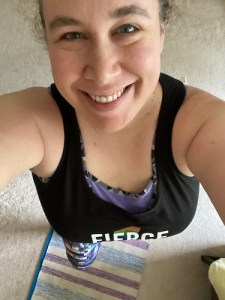 Mixed results here. On the one hand, I have definitely exceeded my expectations for becoming a runner, finishing Couch to 5K outdoors and running two miles nonstop by the end of May. I briefly moved indoors to a treadmill for the summer with our insane temps, but treadmill running was NO FUN plus with this covid-spike San Antonio is under, gyms aren’t safe. However, for a short while I should be able to take up running again as I spend some time in Wisconsin, and otherwise I just have to keep cross-training and hope I don’t lose my endurance over these next few months. I haven’t done as well on the weight loss side. I was hoping to lose 10+ lbs by mid-year, but my body is still resisting all attempts to lose, no matter how well I eat or how much of a daily calorie deficit I add up. At least I’m holding steady, though. I’m still working to figure out the root cause of the inflammation in my body that’s preventing me from getting healthier (both in weight and in other factors). I wish I had a doctor who was helping me. Some general stats:
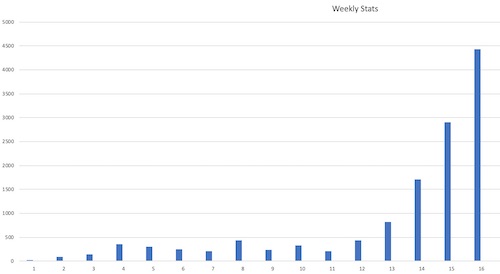
- In the first 182 days of 2020, I exercised on 115 days, adding up to a total of over 89 hours of fitness.
- By the end of June, I’d walked, run, or hiked 204 miles in 2020 so far.
- I’ve had no binges this year, and I’ve basically cut alcohol from my diet altogether, not even having it on special occasions anymore because I don’t like the lingering effects.
- I’ve introduced several new kinds of fitness, including boxing which I love.
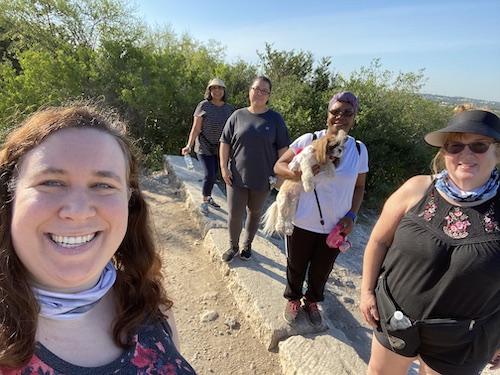
- I’ve been on 13 group hikes this year (in just under three months rather than six re: covid), and discovered 5 new-to-me hiking locations, parks, and natural areas in the SA area, as well as making many new friends and expanding my social support system exponentially
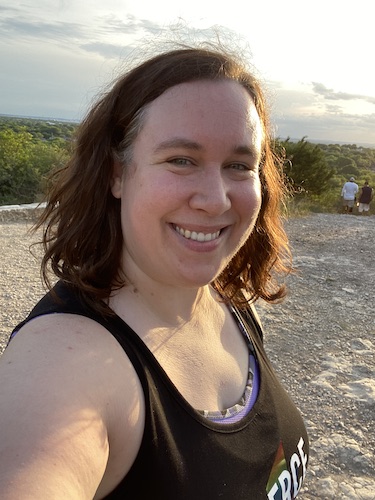
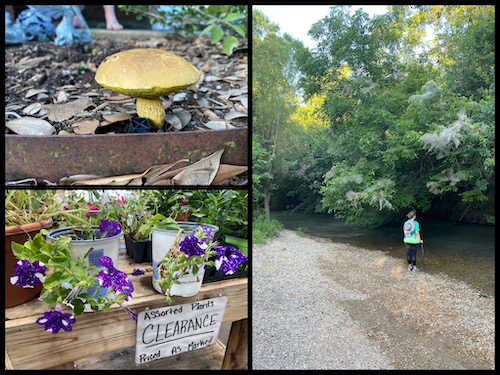
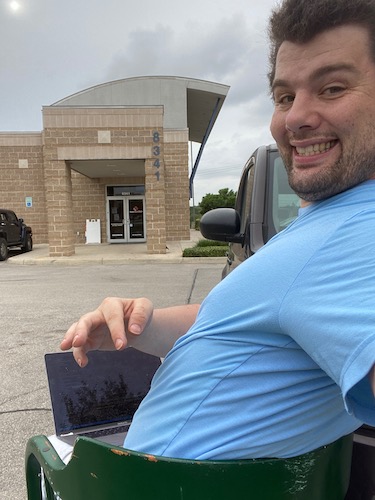
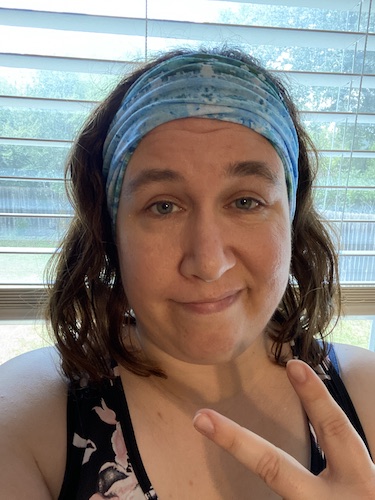
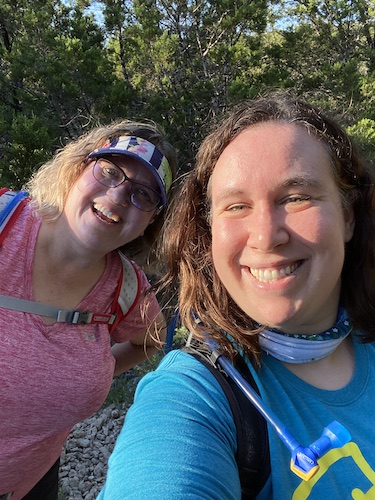
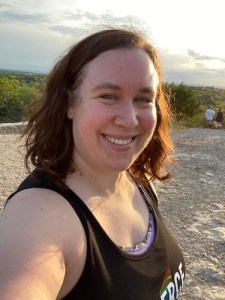 So at six months into 2020, here is what I can conclude. It has been a really rough year in many ways, and the blows keep on coming. But somehow, for the first time since 2014, I’ve been able to roll with each of these punches, get back up, and keep moving. I have days when it all feels overwhelming and awful, and then something in me then clenches, I set my jaw, and I find some way to overpower the emotions dragging me down. It has been a year of making lots and lots of metaphorical lemonade. I don’t know exactly what it is that has caused this shift in me, that has allowed me to FINALLY move past the pain and fear and grief that has been holding me back for the last few years, but I’ll take it! I had a moment in mid-June, while out on a hike, where I felt absolutely on top of the world (pictured). Living my best life. Joy like I hadn’t felt in six years. So that’s what I have to conclude. Not every moment or every day is joyous, but as I look back on the first half of 2020, those positives and happy moments and that feeling of joy is what wins out. For the first time in ages, my smiles are real. I am alive, I fully embody my life again, and I hope that no matter what the second half of this insane year brings, I will continue to live out loud, making as much lemonade as necessary.

 This is the story of Lady Red Sparkle Stone, or just Red, split between the past that led up to her freedom from slavery in the original Girl of Fire and Thorns trilogy, and her current story, nearly a decade after the war from that same trilogy.




















 The Zen Leaf