 Thérèse lives a miserable life in a small shop in Paris. She lives with her aunt and cousin Camille. Camille is a man with poor health and a fantastic amount of pride, and Thérèse is forced to succumb both to his and his mother’s will. Throughout her life and her pathetic marriage to her cousin, Thérèse stays quiet and outwardly compliant, while inside she longs to break free. When Camille’s childhood friend, Laurent, comes to visit, that passion rises to the surface and the two start a turbulent affair. They want nothing more than to be together, but their plans to clear the way to freedom go horribly wrong.
Karen from Books and Chocolate read this book around the same time as me, so we are reviewing it together!
Amanda: Hi Karen! Thanks again for reviewing Thérèse Raquin with me! As my third Zola book, and first try of one of his earliest novels, this was a fascinating experience. I really enjoyed Thérèse, though it was very different from the other two novels I’ve read. I read somewhere that this was Zola’s first novel that transcended pot-boiler and became more literary. I can definitely see that he was making that transition! Fewer characters, more sensationalism, but definite literary undertones. I loved it! How was your experience?
Karen: I really liked this book, but I found it very disturbing and intense. The characters and images from the story were so vivid, I don’t think I’ll ever forget them. This is my second Zola – my first was The Belly of Paris for the Classics Circuit. I don’t know if it’s me, or the book, but I found the characters so much more memorable.
I agree that it’s much more of a pot-boiler than The Belly of Paris, which moved much more slowly. I can see why it caused a big uproar upon its publication – it must have been quite shocking for its time.
Amanda: What really struck me as a difference between Thérèse and the other two I’ve read (Germinal and Nana) was the absence of a million characters! Both Germinal and Nana were just flowing with people, all of whom you knew intimately by the end, even if they were difficult to keep up with in the beginning. Thérèse had what? Seven or eight? Maybe ten at the most? It was a very different setup than the others.
And you’re right, much more pot-boiler. My copy (translated by Leonard Tancock) had an introduction from Zola himself where he complains about having to explain the literary significance of the work, because it seems most people thought it was simple erotica, or what must have passed as erotica in 1800s France. Frankly, I thought Germinal was far more racy, but that didn’t stop Thérèse from being a very creepy book! Very “Tell-Tale Heart.” I actually looked up when that story was written, just to see, and it does look like it’s very possible Zola was influenced by Poe. Did that association strike you as you read?
Karen: It did remind me of Poe, and also a bit of An American Tragedy, which I know is one of your favorites. I do agree about the characters – there are four main characters, plus a few supporting characters. Maybe that’s why Zola was able to make them so memorable. None of the characters in The Belly of Paris were nearly as vivid.
I really hated Laurent, but in a way I really felt sorry for Thérèse. She didn’t have any say in her own destiny – her whole life, everyone else made decisions for her. I wonder if she was so passive because that’s the way she was brought up, without choices, or because it was just her nature. She didn’t strike me as spunky at all. The first real decision she made her whole life was to have the affair with Laurent.
Amanda: First, regarding the characters, I wonder if that was just a quality of The Belly of Paris, because they were extremely vivid in all three I read. The big difference between Thérèse and the others was that there just wasn’t this mass dump of confusing cast that eventually grew clearer with time. I knew who everyone was from the beginning.
I hadn’t thought about the connection with An American Tragedy, but you’re right. There does seem to be that incessant spiral downwards, but at the same time, I have a hard time blaming Thérèse in particular because of her miserable life. Like you mentioned, I felt so sorry for her, and I know her repression led to her later actions. This is something I’ve seen happen to people in my own life – when they are raised too strictly, too repressed, when they escape from that repression they go crazy. Passion bursts from repression, and Laurent just happened to be the person who helped her step over that divide.
Having said that, I didn’t dislike him as much as you did. I thought he was a rather dull, nitwit-ish sort of person, but not mean-spirited. Her image of him, at least before they go through with their plan, is of a god, though. That’s one of the themes that I saw regularly throughout the book, the contrast between image and truth. Like how all the characters kept saying the various marriages and households were perfect, when really they were far from that, or how one of the family friends thinks he knows what the elder Mrs. Raquin is trying to say. I loved how that theme kept repeating!
Karen: I found Laurent repulsive because he was so lazy! He had no desire to work, he just wanted to live off other people – first his father, then the Raquins.
And good catch on the theme of image vs. truth – I didn’t notice that, but in retrospect I completely agree. I’m not the best person at picking up themes and metaphors, but I did get two things out of this book – both of which are sort of clichéd, but true. First, I think that Zola was pointing out that crime does not pay – you could expand this to include immoral behavior. Thérèse and Laurent broke the rules and they were punished. The other is “Be careful what you wish for.” Basically, Thérèse and Laurent got what they wanted – they were together, but it wasn’t what they expected. I suppose that these are related themes, since I think they’re related somehow. I think that each was punishment for the other. They were both really short-sighted about the outcome of their plan.
Amanda: Oh wow! I was going to point out that same theme – Be careful what you wish for. It was like their wish was their punishment. Fantastic! I’m glad you saw that too. For such a little book, this really had a lot in it, didn’t it? And on top of that, the book could be read strictly for plot. There’s so much ghost story creepy vibe to this book that it’s really just on the edge of pot-boiler. In fact, if it weren’t for all the literary themes, I’d say it was pot-boiler! I loved it, though. It was so fascinating to read. I read somewhere that Zola was doing a character study with it…but that seems to be typical of Zola. He loves character studies! Or just studies in general. I think that’s why I love him so much.
Karen: So, do you think it was a character study of Thérèse or Laurent, or both? And I’m curious about the other Zola works that you read. Would you classify those as character studies as well, and, if so, of just single characters or multiple characters?
I also think that Paris is a character in the book. Zola does such an amazing job of describing the the bleak little alley in Paris where the Raquins lived and worked. I know descriptions are you not your favorite thing, but Zola made the whole scene so vivid. The Belly of Paris was set primarily in Les Halles, the famous food market, and he described it so well. And by the way — there are a couple of scenes in Thérèse Raquin which are also extremely vivid, but they are not delicious, to put it mildly. You might not want to eat lunch while reading this book. That’s all.
Amanda: Supposedly it was a character study of all three major characters. They were both supposed to represent different types of personalities, from what I read. Very interesting stuff.
I’m not sure the other books I read would be classified as character studies, but I do think the work he put into studying people paid off when it came to both books. He certainly went out of his way to make sure he know all his subject matter very well, from the descriptions of Paris to the life of a hired woman to the work of coal-miners. He was very thorough. And despite my normal dislike of description, I actually don’t mind it when it comes to Zola, because he weaves it in so artfully (rather than dumping it in page-long paragraphs that go on forever!). I never feel overburdened by description with him. Of course, much credit has to be given to the translators, which have done an excellent job on the books I’ve read. I love Leonard Tancock’s work, so I’ve grabbed up as many of his translations as possible. I wish he’d translated more! How have your translations been?
Karen: They’ve been good — I was surprised at how easy to read Zola is. I guess I was expecting more long, flowery sentences like Dickens — probably because it’s 19th century. But Zola was a journalist first and his prose is really straightforward. I read the Penguin Classics edition of Thérèse Raquin, which is translated by Robin Buss. I thought it was excellent. My edition of The Belly of Paris was translated by Mark Kurlansky, who also wrote some great non-fiction food books. I found it very easy to read, almost contemporary, but not in an intrusive manner — I recently read a translation of Chekhov that was so contemporary, it was rather jarring.
Anyway, I’m really happy to have discovered Zola, who has become one of my favorite classic authors. I went out at bought another of his novels, The Drinking Den, and I’m planning on reading it soon. I will definitely post my impressions as soon as I get to it! Any more Zola on your to-read list?
Amanda: Yep, a whole bunch. Next up will be La Bête Humaine, recommended by my friend Veronica, who says Zola is her fav author and that’s her fav Zola. I’d also love to get my hands on and read The Dream this year. It sounds so fantastic!
Thank you so much for doing this joint-review with me Karen! Any last words on Thérèse Raquin? My only thoughts are that if I’ve loved three different Zola novels like this, I’m hopeful that I’ll just keep loving them!
Karen: You’re so welcome, I loved it! We’ll have to do this again soon. I’m definitely reading more Zola. Besides The Drinking Den, I’m hoping to read The Kill and The Ladies’ Paradise, plus of course Germinal — it would be great if we could discuss it in our book group.

 I’m honestly not sure how to summarize this book. The back of the book description gives away nearly everything from beginning to end, all but one secret, but I can’t think of any way to describe this other than by telling the whole story, either. I guess I’ll just have to say it’s about two sisters, Rebecca and Maya, who witnessed their parents’ murder when they were teens, and the way their lives go as adults. But even that misrepresents the book, because it really has very little to do with the murders, and more to do with their lives as two different physicians and what happens to them when they’re working on a disaster-relief assignment. Already that gives away more than half the plot. Sigh.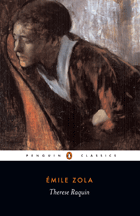








 The Zen Leaf