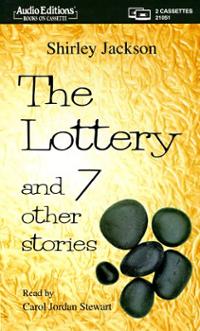
The Lottery and Seven Other Stories, by Shirley Jackson (audio)

lottery-seven-other-stories-shirley-jackson-audio-cover-artThe Lottery was a fantastic story, probably the best short story I’ve read in a very long time. It was creepy and foreboding, especially when you couple the end with the innocent beginnings in the children’s actions. I loved it.

The rest of the stories in the collection were not of the creepy variety, which is what I had been expecting from them. They were more stories about life and while they were well-written, I had been expecting something else and therefore didn’t get as much out of them.

Posted in 2011, Adult, Prose | Tagged , , , , | 1 Comment

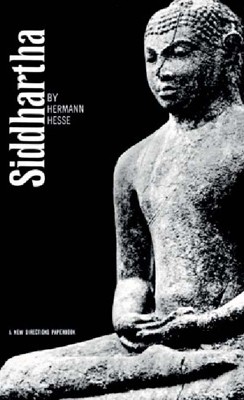
Siddhartha, by Hermann Hesse

siddharthaI have been terrified of Hermann Hesse for years. I’m not sure how I got the impression that he was difficult and dense to read, but I’ve avoided him. Next year, however, my book club is reading Siddhartha, so I decided to bite the bullet and read it now.

Siddhartha is about a spiritual journey. Siddhartha is a young man in India learning how to be a holy man. He is smart, clever, earnest, and seeking, and therefore unsatisfied with what his teachers can teach him. The book follows his life through many lessons, from young childhood almost to his death.

I had no idea what I was really expecting from this book, but it was very different from anything I could have imagined. I really enjoyed the first 3/4ths of the book. Siddhartha’s journey seemed to be a metaphor for the stages of life. He went through the disillusionment of the teenage years. In his young adulthood, he desired to escape the prison of his body and become one with the universe. He rejected the teachings of everyone and decided he could only find his own path alone. Then as he grew older, he tried to keep to his ideals while living in the world, doing worldly things, until the world overtook him and swallowed him up, and he lost his ideals and became ordinary. This lasted until a mid-life crisis where he rejected his life and went back to his ideals.

All throughout his life, Siddhartha learns new lessons, finds new philosophies. He learns about the cycles of life, about the patterns of fathers and sons, about what can be learned from teachers and what must be learned from experience. At one point he makes a statement that, to me, sums up most of what’s taught in this book:

This path is stupid, it goes in spirals, perhaps in circles, but whichever way it goes, I will follow it.

The book is less about a person and more about life in general, philosophies that can be applied to the universal man. As you can tell from the above quote, there’s a certain uber-spiritual, self-helpish tone to much of the book (reminded me a bit of The Prophet by Kahlil Gibran or The Alchemist by Paulo Coelho). It’s certainly preachy, but not in a way that feels forced. More like it’s meant to be a spiritual guide, to take if you’d like or leave behind if you prefer.

I enjoyed most of the book, but admit that the last quarter of it got too woo-woo for me. I felt like Siddhartha’s journey stopped being a metaphor for life in general and simply became a collection of spiritual babblings, most of which sounded too over-simplified for me to really take seriously. Then again, even the book says that that’s how it will sound:

What is of value and wisdom to one man seems nonsense to another.

And perhaps that’s all there is to it. By the time Siddhartha has achieved peace and enlightenment at the end of his life, he can no longer use words to explain what he has found. Not adequately, at least. He says that man can teach knowledge, but not wisdom, and the end of this book seems to be trying to do the latter, which is probably why it felt, to me anyway, inadequate.

But still, the book was definitely worth reading. Yes, it was a little preachy and woo-woo, but it has some interesting stuff in it, and I definitely could recognize different parts of my own life in Siddhartha’s. This is another one I’ll be very happy to discuss with my book club, and I’m glad I finally got over a little of my fear of Hesse. Maybe one day I’ll even attempt Steppenwolf (the one that really scares me).

Posted in 2011, Adult, Prose | Tagged , , , , | Leave a comment

The Leftovers, by Tom Perrotta

leftoversThe premise: One day, a good portion of the world’s population just disappears. Call it the Rapture, the Sudden Departure, or whatever you want. One moment they are there, the next, they’re gone, and the rest of the world is left behind to deal with the aftermath. How do people deal with this? How do they make sense of this new world? How do they handle their grief and confusion?

This is my third book by Tom Perrotta, after Little Children and The Abstinence Teacher. He has quickly become one of my favorite modern authors. While The Leftovers has a more supernatural or dystopian sort of premise, the rest of the book follows the same suburban exploration that exists in Perotta’s other fiction. This isn’t a story about the Rapture. It’s a story about how people deal with sudden, inexplicable loss and great upheavals in their world.

Recently I posted a review of Waiting for Godot. One of the things I talked about in there was the idea that people seem compelled to make meaning out of the inexplicable. That is something that is strongly explored in The Leftovers as well. Whether the inexplicable is a sudden plague that kills without a known cause or the sudden disappearance of a collection of individuals, people as a whole need to create new sense and order of their changed world. Whole religions and lifestyles and philosophies are born of this need to create sense and order.

Perrotta explores that. There are groups of people in The Leftovers who take vows of silence and refuse to forget the past. There are groups who turn to cult-like, polygamous religions that glorify what essentially amounts to pedophilia. There are groups who use self-flagellation, groups who seek out physical pleasures, groups who try to keep the world going exactly as it was before. And more. Everyone out trying to re-order their world into something that makes sense again.

The book, to me, turned out to be a double exploration. It wasn’t just about how people cope, but also about how extremist groups, no matter what their philosophy, can damage people even as they attempt to heal them. It’s about how good intentions can eventually twist and warp into something evil, and how people will believe this evil is necessary for a greater good. It’s about how power and popularity can corrupt, both individuals and groups. It’s about the transformation of philosophy into dogma, faith into religion, guideline into law.

Perrotta, of course, does this all brilliantly, but I’ve come to expect no less from him. Little Children remains my favorite of his novels, but The Leftovers has definitely earned a place on my shelf.

Posted in 2011, Adult, Prose | Tagged , , , | Leave a comment

Waiting for Godot, by Samuel Beckett

godotWaiting for Godot is a French absurdist play written by an Irishman who then translated it himself into English. There is no plot. Two men, Vladimir and Estragon, meet at a tree every day and talk, while they wait for Godot, who says he will come at nightfall. While they wait, they meet another two men, Pozzo and Lucky, the latter leashed like an animal by a rope around the neck. The play is a tragicomedy.

I’ve had very little experience with tragicomedies and absurdist literature. I read the first act of this play in one day and was left perplexed. There didn’t seem to be any point, and I couldn’t tell if this was because it indeed had no point, or if I was just missing the point, or if Act 2 would bring Act 1 into perspective and thereby gain a point. The comedy in the play irked me (not a huge fan of bathroom humor) and I just didn’t get it. I decided to wait a day before I read Act 2, and to hold off judgement until then.

Act 2 started in much the same way as Act 1, and again just seemed pointless, but periodically a line or two would dance out and touch me in a slightly more meaningful or somber way. The play began to take on more weight, even if it still made very little sense to me. I toyed with ideas – that “Godot” was symbolic of God, that life is meaningless, etc, the sorts of things one would expect to wonder and think about while reading this play.

Towards the end, two lines really stood out for me, and I’m going to quote them here because they really put the play into perspective for me and made it something more than drivel, which is what it felt like up to that point. The first is from Vladimir, as Pozzo cries out for help in the background:

Let us not waste our time in idle discourse! Let us do something, while we have the chance! It is not every day that we are needed. Not indeed that we personally are needed. Others would meet the case equally well, if not better. To all mankind they were addressed, those cries for help still ringing in our ears. But at this place, at this moment of time, all mankind is us, whether we like it or not. Let us make the most of it, before it is too late!

Two thoughts went through my mind as I read this. First, it finally felt like something in this play, anything, had said something important. Like this was a nugget to be extracted, a philosophy that could be applied to life in general. Let us not waste our time in idle discourse. Let us do something. Let us make the most of it, before it is too late! Yes. Then, second, my thoughts flipped around to the scene, where Pozzo lies on the ground crying for help to stand up, while Vladimir waxes philosophical in front of him. And I realized, what is the point of all that philosophy? A man has fallen and needs help getting up. A man cries out for help. Do you really need to turn such a small event into something grandiose and worthy of whole philosophies?

So I wondered – was Beckett specifically pointing out the absurdity of this kind of philosophy, the way human beings try to make sense of the world by turning it into something larger and grander in order to give it meaning? Was I initially relieved by this quote because of my need to make sense of something senseless and incomprehensible? Perhaps. Perhaps that’s the point.

Second quote. This is also from Vladimir, as he looks at Estragon, who has fallen asleep.

At me too someone is looking, of me too someone is saying, He is sleeping, he knows nothing, let him sleep on.

This quote literally gave me chills. Of course, I went through all the same thoughts as with the first quote, but added in some new ones. Thoughts about life and how we mostly go through it in a dreamlike state, how we don’t realize just how much we miss as we wander through life. These are the sorts of thoughts that Thornton Wilder discussed in his play Our Town, which is one of my favorites specifically for those thoughts. It’s another philosophy about life, and again, I wonder if maybe Beckett was just pointing out the pointless absurdity in this one as well. Maybe I reacted to these two lines solely because they are philosophies I’m familiar with and that I identify with.

In the end, what I really got out of Waiting for Godot is that there is no point to anything, no meaning to anything, that the play itself is nothing, nothing at all, really an absolute waste of time…except that without the play, perhaps we would be less able to see that there is no point. An absurd catch-22 in itself.

I have done no research into Samuel Beckett or Waiting for Godot. These are simply my thoughts having read it. It’s possible, once I do some research and read some literary analysis, that I will come to entirely different conclusions. I may be extremely off-base. I don’t know. But I do know that pointless or not, this play really got to me. I didn’t even like it, but it got to me, until I loved it at the same time that I disliked it, and I am so, so glad I read it.

Posted in 2011, Adult, Drama | Tagged , , | 2 Comments

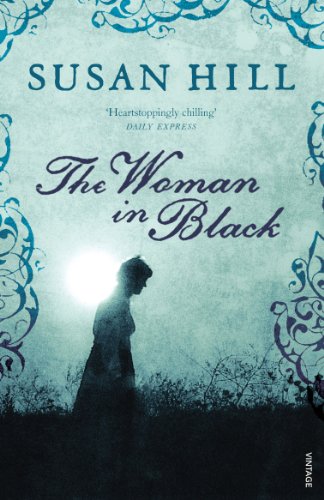
The Woman in Black, by Susan Hill

woman in blackThe back of my book says this is like a Jane Austen ghost story. I completely disagree with the Jane Austen assessment, but the story itself is really good. Creepy and haunting, with an old-fashioned feel. I quite enjoyed it!

Note: The movie version was even creepier. I had to watch it with my hands up in front of my eyes.

Posted in 2011, Adult, Prose | Tagged , , , | Leave a comment

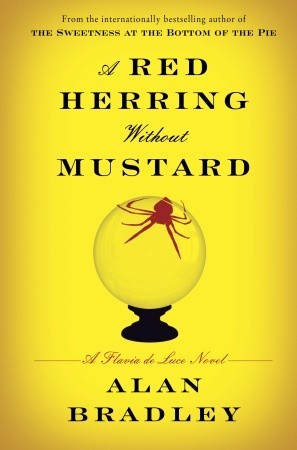
A Red Herring Without Mustard, by Alan Bradley

red herringConsidering I didn’t like the second book in this series, I was very pleased with volume three. It was very enjoyable, possibly even more so than the first one. I liked learning much more about the de Luces, and I really liked Porcelain – I hope she ends up coming back! I also like how everyone in the de Luce household seems to be evolving, growing up, and maturing. Moving on past their past. I felt movement not only in the story but in the series as a whole, and that was great!

Posted in 2011, Adult, Prose | Tagged , , | Leave a comment

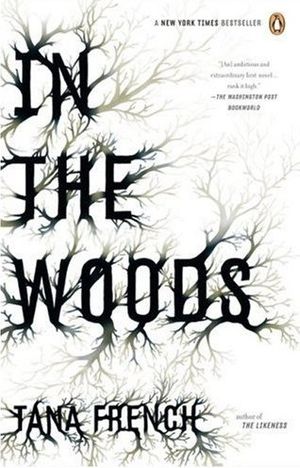
In the Woods, by Tana French (audio)

in the woodsYesterday, I was sick. Some sort of icky head cold that could have been either a back-to-school thing or due to the poor air quality we currently have in town with all the wildfires raging nearby. Whatever the case, I felt so awful yesterday that I pretty much spent the entire day laying on the couch. I didn’t have the mental energy to read, and the TV held no appeal whatsoever, so I spent the whole day listening to the second half of In the Woods by Tana French.

In the Woods is a double mystery set in Ireland. It’s told from the point of view of Detective Ryan, in whose childhood lies the first mystery. The present-day mystery may or may not be related to the old one, and the book explores the detective work in the process of figuring both cases out (or trying to, at least).

I enjoyed In the Woods, though I do wish I’d spread it out a bit longer. I enjoyed the first half, which I listened to over the course of two weeks, much better than the second half. I think I sort of ruined the experience for myself, listening to it all at once that way. By the time I got to the various climaxes, I was ready for the book to end, not because it wasn’t good, but because I’d had enough of it for the day. I should have stopped, but didn’t.

It didn’t help that in the second half, I really started to dislike the narrator, Detective Ryan, who turns out to be a world-class jerk. I’m still trying to work out in my mind if he had a reason for being so awful. Something about the psychology just didn’t feel right. It felt less like a realistic personality shift and more like an author-contrived vehicle to move the story a specific direction, and that never sits well with me. It was particularly bad in this case because there is so much emphasis on psychology all throughout the story.

However, out of the whole book, that’s the only thing that really bothered me, so over all, I still think it was well done. I spotted the culprit very early on, but still had a good time watching how things unfolded. I particularly enjoyed how the book ended, that it wasn’t as cut and dry as many mysteries are. I appreciate realism in books and definitely appreciated it here. It made the book far more unique than expected. I’m looking forward to listening to the next volume of this series, though I’ll probably wait a few months to give myself a rest between the two books.

Performance: The audio I listened to was read by Steven Crossley, who did a fine job. No complaints.

Posted in 2011, 2018, Adult, Prose | Tagged , , , , | 4 Comments

The Turn of the Screw, by Henry James

Turn-of-the-ScrewMy husband swears that I read this about a decade ago, so I decided to read it and see for myself if I remembered it. He was right. Parts of this book and certain images definitely came back to me, but I can see exactly why it was less than memorable. The writing is, for the most part, incredibly dull, and the story didn’t really get interesting until the last 30 pages or so. I did more skimming through page-long paragraphs than actually reading, which is okay since mostly I just wanted to see if I had indeed read it before as my husband told me I had. I’m only putting up this mini-review so that when I forget that I’ve read this in the future, I can show myself that I really have.

Note: Originally read (most likely) in 2001.

Posted in 2011, Adult, Prose | Tagged , , , | Leave a comment

Good and Happy Child, by Justin Evans

good and happyAah, my first RIP book, and it was a doozy! I’ve wanted to read Evans’ debut since reading his second book, The White Devil, back in the spring. To get the requisite comparison out of the way, I enjoyed The White Devil more, but that’s probably just because I was obsessed with Lord Byron when I read it, and so I appreciated the subject matter a little more. Subject matter aside, both of Evans’ books are solid horror novels that are creepy but not too creepy. That’s perfect for me, since I don’t like things too scary or bloody/graphic.

A Good and Happy Child is the story of George Davies in retrospect. In the past, he was a troubled eleven year old whose father had just died. In the present, he’s an adult whose marriage is falling apart because he can’t bring himself to touch his newborn child. He has repressed all the memories from his childhood, but they all start to come out as he works with a therapist to get over his fear of touching his son.

Just like in The White Devil, there are many, many facets to this book. It runs the gamut from schizophrenia to demon possession to murder, and leaves you unsure exactly which interpretation of the events is reality. While many of the events are dark, the book didn’t really get creepy for me until just after 200 pages, when something occurs that seemed almost calculated to terrify me personally. I won’t talk about the actual scene, but I will say that I read that particular chapter right before going to bed and I knew the moment I read it that I should have stopped on the previous chapter! I knew I would dream about it that night, and indeed, I did! Freaked me out!!

Without that scene, I’m not sure I would have enjoyed the book as much. It really sealed the “horror” label for me, the delightful creepiness that I really want in my RIP books. Because of that scene, A Good and Happy Child made the perfect opener for the season, and prepped me for lots of wonderful chills going forward through the next two months!

Posted in 2011, Adult, Prose | Tagged , | Leave a comment

Shatter Me, by Tahereh Mafi

shatter meI really enjoyed this dystopia. The story developed well over the whole book, ending in a good spot to wait for the sequel. The writing was fantastic and actually reminded me of some of my own experimental writing in my late teens/early 20s, an almost stream-of-consciousness-lite, where it follows thoughts and doesn’t always stick to grammar/punctuation rules, but easy to read as well. I liked Juliette’s personal progression through the book and am looking forward to the next installment. I also want to know more about Warner and have some specific ideas about how he ties in to Juliette’s past. My only qualm about the book was that there was too much sexual tension too often, to the point where it became a bit redundant and boring. I just have a hard time believing that people dying of bullet wounds and torture would put all that aside for sex. But other than that minor qualm, it was a very enjoyable book. Thanks for sending it my way Caitie!

Posted in 2011, Prose, Young Adult | Tagged , | Leave a comment