It’s been a pretty good year for books for me. It didn’t start that way. While I had some good books from time to time, 2011 started a lot like the way my entire year went in 2010 – mostly duds, with a gem that popped up every once in awhile. All my worst books of the year came from the first 4 months. I’m pretty sure that’s because for the first 4 months of the year, I was still averaging 17 books a month. That’s just too much for me. Since I got rid of my virtual and physical TBR, dropped all reading-related challenges, and stopped reading so fast, I’ve enjoyed my reading year much more!
Now it is time to wrap up my 2011 book journey! I’ll start with Jamie’s End-of-Year Book Survey, which I love. Then I’ll talk a bit about my favorite books of the year, and put up some quick stats for the number-lovers (like me) out there!

1. Best Book You Read In 2011?
There are six, and I won’t name them here because I want to talk about them in more detail below. 😀
2. Most Disappointing Book/Book You Wish You Loved More Than You Did?
Habibi by Craig Thompson. I loved Blankets and had looked forward to this one for a long time, but while the art was beautiful, the cultural portrayal made me very uncomfortable, and I felt like Thompson got off on the juvenile humor way too much. I was incredibly disappointed.
3. Most surprising (in a good way!) book of 2011?
The Host by Stephenie Meyer. I had read the first two Twilight books and hated the second one so much that I never finished the series. I expected The Host to be equally lame, but it ended up being much deeper than I would have ever guessed and left me thinking for a long, long time.
4. Book you recommended to people most in 2011?
The Omnivore’s Dilemma by Michael Pollan, which is just an incredible look at where our food comes from. I would recommend it to everyone!
5. Best series you discovered in 2011?
Not sure if this counts, because I didn’t really “discover” it as “read it as soon as the first book came out,” but I will have to go with the London Shades series by Maureen Johnson. I adored The Name of the Star.
6. Favorite new authors you discovered in 2011?
Michael Pollan, Erin Morgenstern, Justin Evans, and Selma Lagerlöf
7. Best book that was out of your comfort zone or was a new genre for you?
The White Devil by Justin Evans. I never, ever read horror novels and there are some scenes in there that really creeped me out, but it was fantastic! I really admired the author’s guts in ending the book the way he did.
8. Most thrilling, unputdownable book in 2011?
Well, despite the fact that I had a LOT of problems with this book, I’d have to say my most unputdownable book was The Unbecoming of Mara Dyer. So unputdownable that I read it a second time, despite taking many, many issues with the writing, characters, and plot.
9. Book you most anticipated in 2011?
Habibi again. Sadly.
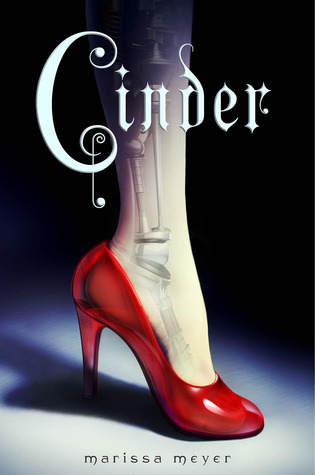
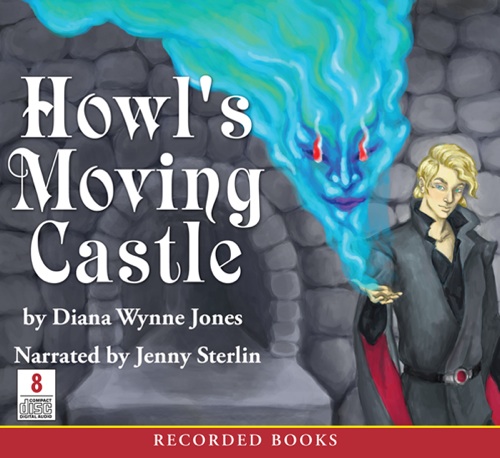
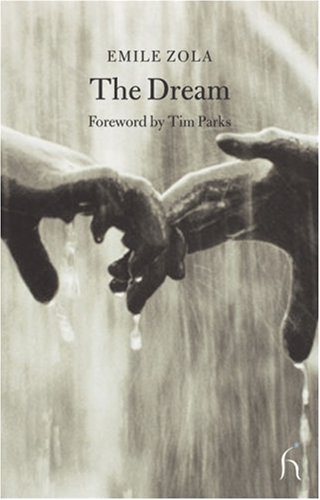
10. Favorite cover of a book you read in 2011?

11. Most memorable character in 2011?
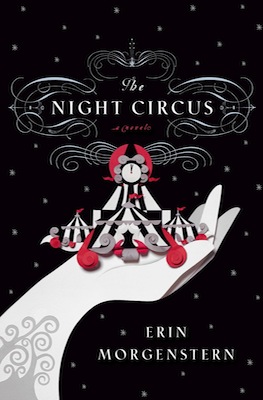
Does the circus in The Night Circus count? Because that one was by far the most memorable, and I would argue that the circus is the most important character in that book…
12. Most beautifully written book read in 2011?
The Inferno by Dante (especially as translated by Robert Pinsky) and The Night Circus by Erin Morgenstern.
13. Book that had the greatest impact on you in 2011?
Two in this category. First, The Omnivore’s Dilemma, which changed the way I thought about food and has helped me so much on my nutritional journey. Second, The Night Circus, which really got me excited about writing again after taking almost an entire year off and thinking I might give up completely.
14. Book you can’t believe you waited UNTIL 2011 to finally read?
I’ve meant to read The Nun by Diderot for 12 years now, and finally did. It wasn’t amazing, though, so it didn’t really matter that I waited. None of the really amazing books I read this year were ones I’d put off for a long time.
15. Favorite Passage/Quote From A Book You Read In 2011?
I’m really bad at remembering passages, but this one that I quoted in one of my reviews was gorgeous. It’s from The Unit by Ninni Holmqvist:
And when Elsa was finally unable to control the sobs she had suppressed until now, when her cries became louder and more piercing and persistent, first one of the diners got up, then another, and a few more, and the hostess hurried over to the buffet table and put down the dish so that her hands were free. The next moment a crowd of people surrounded Elsa in a semicircle, some sitting on chairs they had dragged along with them, others standing. Those who could reach were touching her. With steady hands they held her shoulders, or stroked her arms, her back or the nape of her neck. As if they were holding her together.
16. Book That You Read In 2011 That Would Be Most Likely To Reread In 2012?
The Night Circus. In fact, I’m already on the hold list at the library for the audio version. Can’t wait to revisit!
17. Book That Had A Scene In It That Had You Reeling And Dying To Talk To Somebody About It? (a WTF moment, an epic revelation, a steamy kiss, etc. etc.) Be careful of spoilers!
The climax of Jude the Obscure by Thomas Hardy, with Little Father Time. Oh my gosh. That’s one of the most powerful, disturbing, memorable, and shocking scenes I’ve ever read.
Best Books of 2011
And now that I finished up the survey, I want to talk about my best books of 2011. In the past few years, it’s been really difficult for me to narrow down my top books, but for some reason, this year it was really, really easy. There are six that stand out far above the rest. Here they are, in the order that I read them.
 The Host by Stephenie Meyer
This was the very first book I read in 2011. Technically, I listened to it, and finished 3/4ths of it in December 2010. It hardly counts as a 2011 book. As I said in the survey above, I really didn’t expect much from this book. I have not liked Meyer’s writing in the past, or her characterization and stories, and when I began to listen to this one, I went into it with a very cynical mind. Quickly, though, I found myself carving out extra time to spend with the audiobook, dreaming about what might happen next, and thinking about the ethical dilemmas of the book. I fell in love with many of the characters, and after I was done, the book stayed in my mind far longer than I ever expected. For anyone who was turned off of Meyer by Twilight, I really recommend giving her another chance, because this book is worth it.
 Jane Eyre by Charlotte Bronte
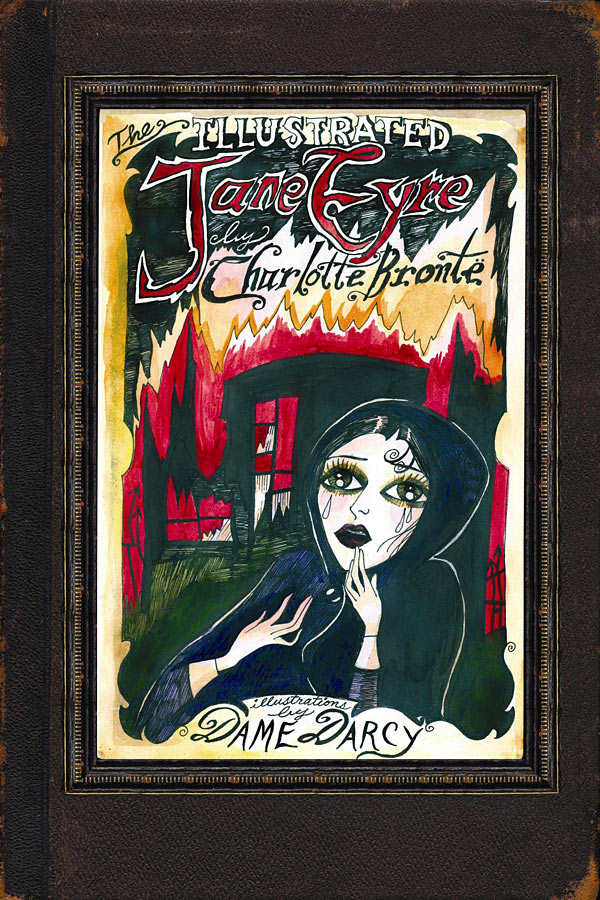
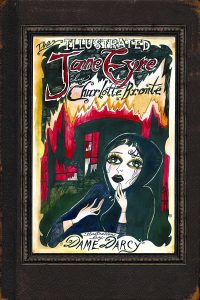
This was actually my second read of Jane Eyre, the first being in early 2008, right before I started blogging. When I read Jane Eyre the first time, I’d somehow avoided all spoilers about the book, and went into it blind. I expected to dislike the book (this is a frequent theme among my favorite books, I find), but ended up loving it so much that it became a thematic element in one of the books I was writing. Revisiting it three years later was amazing, especially as a second read, knowing the spoilers already, and with a Dame Darcy illustrated version. Jane Eyre remains one of my favorite books of all time, and I admit to being completely and utterly in love with Mr. Rochester.
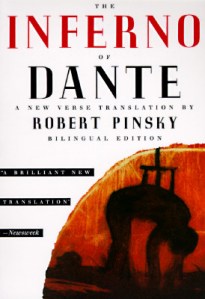 The Inferno by Dante
Like Jane Eyre, this was a reread. I first read The Inferno in college, and we spent weeks discussing it. I don’t think I would have gotten nearly as much out of it without those college classes, and I’m incredibly grateful for them. I wish we’d done Purgatorio and Paradiso as well! I’ve never read them and I feel lost when I try. Revisiting The Inferno after 13 years was an incredible experience. I loved the Robert Pinsky translation. I read it three cantos per day, breaking up the experience, and savouring all the footnotes. That makes me a total geek, I know, but I just adored this book so much, even more the second time around. I know some people are really afraid of this book, but it really is so beautiful and wonderful! You shouldn’t be afraid. Especially if you get the Robert Pinsky translation, because it’s incredibly easy to read.
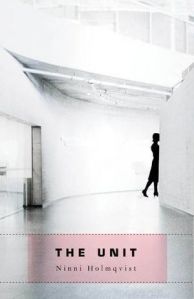 The Unit by Ninni Holmqvist
A lot of the dystopia I’ve read over the last few years has been frustrating to me. However, when I read The Unit, I knew – THIS is what dystopia should be!! There is so much depth, and so much conflict. So many dystopias are completely straightforward – good versus evil – but nothing was that clear-cut in this book. It is beautifully written and incredibly thought-provoking. I adored the ending, though I know some people despise it. I adored it because it felt far more realistic than if it had ended any other way. It also reminded me in some ways of my own dystopian novel, and gave me hope that there might be a market for mine some day.
 The Omnivore’s Dilemma by Michael Pollan
I said above that the Omnivore’s Dilemma had a huge impact on my life. I can’t describe just how big that impact was. You know how some people, when they read about the abuses of animals that take place in the food industry, go vegetarian or vegan? I had a very similar reaction to this book, except against processed food. I’ve never been one to eat tons and tons of processed food, but I’ve never been actively anti-processed food either. After reading this book, I gave up fast food completely, and started eating far cleaner than I ever had before. I increased my produce intake and got more interested in cooking. I started going with my husband and kids to the grocery store, and trying new foods. I looked into CSAs and farmer’s markets, and even have the desire to garden. Me!! This is a literal 180 shift for me, and that impact hasn’t worn off with time. Michael Pollan’s writing is easy to read, informative, unbiased, and non-judgemental. It looks at facts and history. It is journalism in its best form, and I would recommend this book to anyone.
 The Night Circus by Erin Morgenstern
I read this one at the end of September, and since then, no book has been able to live up to its standard. This book is incredible in writing, tone, world-building, characterization, everything. I was completely blown away by it, and since I finished it, I’ve wanted to revisit. I haven’t yet, but I will soon. Now this book was always going to be one of my favorites with how incredible it was, but it became even more so because it revitalized my own writing. I decided early in the year to take a sabbatical from writing, and to possibly quit altogether, after writing for my entire life. Late in the summer, I had a few twinges of potential writing inspiration, but nothing that really got me writing again. The Night Circus did. It got me excited about words and projects. It made me see writing differently. Because of it, I decided to do NaNoWriMo again this year, and I’ve been writing nonstop ever since. I have a WIP that I’m more excited about than any I’ve written since 2008, and I’m so grateful that The Night Circus got me motivated and inspired again.
Honorable Mention: Lady Audley’s Secret by Mary Elizabeth Braddon – This one wasn’t quite good enough to end up in my top books, but it certainly stands apart from the rest of the books I read this year, so I had to give it a quick mention. If you’re looking for good RIP-quality sensationalist nineteenth-century fiction, this one is fantastic!
And lastly, book stats:
(Feel free to skip these if you’re not a numbers person!)
Total books: 128
New reads: 112
Rereads: 16
As usual, my new reads vastly outweighed my rereads, and I’m okay with that. I’m very happy with how few books I read compared to 2009 and 2010 (184 and 217 respectively), and I’m hoping to decrease that number even more in 2012. Under 100 would be great!! I think under 100 is a good pace for me to really enjoy the books I read.
Novels/Novellas: 96
–Speculative: 44
–Realistic: 52
Nonfiction: 15
Collections/Anthologies: 8
Plays: 6
Poetry: 3
Again, no surprises there… I’m glad my play count is up from previous years!
Text/E-text: 98
Graphic/Photo/Art: 7
Audio: 23
My audio didn’t increase as much this year as I expected.
Classics: 49
Contemporary: 79
I’m so glad the classics are still up! I like this balance – about 40/60.
Adult: 91
YA: 23
Children’s: 14
And my YA and children’s book counts keep getting lower and lower. I rarely enjoy these now, unfortunately, especially children’s books. The Harry Potter series is the only reason that children’s number is as high as it is.
By men: 53
By women: 73
By both: 2
For the last couple years, I’ve read nearly twice as many women authors as men, so I’m glad this is at least closer to 50/50.
Chunksters (450+ pages): 21
In translation: 25
Translated from: English (7), French (5), Russian (4), Swedish (3), German (2), Finnish (1), Spanish (1), Italian (1), Norwegian (1)
Note: The seven books translated from English were the Harry Potter books that I read in French.
Longest Book: The Complete Stories of William Somerset Maugham – 1,636 pgs
Shortest Book: The Lost Thing by Shaun Tan – 32 pgs
Longest Audio: The Host by Stephenie Meyer – 23 hrs
Shortest Audio: The Pearl by John Steinbeck – 2.5 hrs
Most read author(s): JK Rowling, as usual, with 8 books (7 in French, 1 in English). There were no other high authors this year, the next one down being Nabokov with 3 books. I read many authors twice.
Best book-related discoveries: I’ve been answering this question since 2008, and this year, it’s difficult to answer. I didn’t make any great discoveries in authors or genres or media like in the last few years. After thinking really hard, I think my best discovery is that it’s okay to go weeks without reading a book if I don’t feel like it. It’s okay to wait and savour a book’s effect on me, rereading it or just thinking it over, for a long time, before diving into the next book. It’s also okay not to be slave to a book list or TBR pile, to read only what I want, and to abandon books if they aren’t speaking to me. I guess my best discovery, then, is that I can read how I want, when I want, what I want, and that’s okay. I like that.

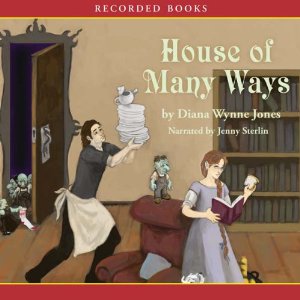 House of Many Ways is the third book in the Howl series, and like Castle in the Air, it is more a companion novel than a direct sequel. Once again, this book takes place a couple years after the last book, and we get to see where several of our favorite characters have gotten to in the last little while. There is more of Sophie, Howl, and Calcifer in this book, which made me happy. The setting is High Norland, a small country in the same world as Ingary. The royal wizard of High Norland has become ill, so his great-great niece, Charmain, comes to look after his very strange house while he is away being treated. Charmain is a big bookworm and doesn’t know anything about magic or taking care of houses, which makes her life in this house quite interesting.