Readathon: Fun Home, by Alison Bechdel

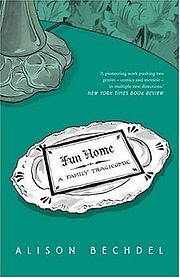
180px-FunhomecoverThis is a graphic novel memoir. Alison Bechdel’s father was a hands-off sort of person, the type of dad who favored his restoration furniture over his kids. He was also a closet homosexual who had multiple affairs (sometimes with teenage boys) kept hidden from everyone in his family except his wife. He loved literature and house restoration and girly things like flowers and barrettes. Alison assumed a masculinity her dad didn’t have, and eventually decided she’s a lesbian. After she announces this at home, her mother tells her about her father’s affairs.

The book was written after Alison’s father’s death. Alison conjectures that the death was suicide, though it’s officially considered an accident. Her coping process is strange and felt incomplete.

Actually, the whole book felt strange and incomplete to me. I felt like there needed to be so much more. Instead, it fell flat. I didn’t grow by reading this book. I didn’t feel like I learned anything at all. And I was rubbed a little wrong by the implications that 1) Dad was gay because he was molested as a child, 2) Dad was a pedophile because he was gay, and 3) Alison was gay because her dad was effeminate. Those sorts of things really irk me, and if this was fiction, I’d blast it to bits. It’s nonfiction though; these things actually happened, and I don’t fault the author for them, so I won’t blast it to bits. All the same, I’m a little uncomfortable with the suppositions put forth, none of which I believe.

I wanted to like this book. The artwork was amazing, though I didn’t like the monochromatic aquamarine coloring, and it was extremely graphic at times. I’m glad I read this when my kids weren’t home, and I’m a little anxious to get it back to the library so they don’t wander by, pick it up, and look through it because it’s full of pictures. There are too many naked scenes in there for me to feel comfortable with when the kids are around. They didn’t bother me on a personal level, given the subject matter, but my kids have wandering hands. I wouldn’t want to own this book.

I tried to go back and read this book again before reviewing it. I read it in the late night/early morning hours of the Read-a-thon, right when I was starting to get tired. (The coloring didn’t help.) I thought maybe I’d missed something in my fatigue. But when I tried to reread it, I just wasn’t that interested. I got through a few pages and gave up. I think once through was enough for me.

It wasn’t a bad book. It was very easy to read, it drew intense emotions, but in the end, I just wasn’t satisfied.

Posted in 2009, Adult, Visual | Tagged , , | Leave a comment

Readathon: Peeps, by Scott Westerfeld

peepsCal Thompson acquires a parasite during a one-night stand at the beginning of college. Fortunately, he didn’t have to suffer the worst of symptoms that normally come on with this parasite – cannibalism, anathema, gathering a brood – but unfortunately, he passed the disease onto others before realizing he had it. Now, he’s tracking down former girlfriends, trying to make sure they don’t spread the infection.

This is a vampire book, but not a vampire book like any I’ve ever read. It’s very unique. Saying vampirism is caused by a disease is not new or anything. Even Twilight has vampire-disease in it. However, this book is grounded in science, and the disease is made out to be plausible. There is a good explanation for everything. For instance, take Twilight (and I only take this one because I really don’t like vampires and read very little about them, and this happens to be the only book I remember offhand. I’m really not making fun of Twilight here). Once bitten, a person is poisoned and infected. The infection them causes them to 1) become immortal, 2) become very cold and very pale, 3) become gorgeous, 4) hunger after blood, 5) become super strong and super fast, and 6) glitter in the sunlight. There’s also usually a super power involved, unique to each vampire. None of this is explained in plausible, scientific terms.

In PEEPS, however, all the vampire myths and legends are explained: why vampires (known as peeps) are associated with sex, why it’s said they don’t show up in mirrors, why they don’t like sunlight, their issues with garlic and crucifixes, why they are associated with rats and bats, why their strength and lifespan increase, why they are associated – not altogether correctly – with drinking blood. Etc. All of it has a rational, scientific explanation, and more often than not, myths are simply exaggerated and/or misunderstood tales about vampires. Take for example the age-old idea of vampires being warded off with a crucifix. Cal Thompson explains that this is because the parasite causes the host to fear the things they once loved, in order to get them to leave the place they once lived. There is a long, technical, brain-chemicals-and-survival-for-the-parasite explanation (termed anathema) for this that I won’t give here. At one point, crucifixes were a beloved symbol for many people, hence being able to ward off vampires with them. In today’s time, different things would have to be used to ward off a vampire. My favorite quote was regarding this:

…you’re much more likely to stop peeps with an iPod full of their favorite tunes. (With certain geeky peeps, I’ve heard, the Apple logo alone does the trick.)

Imagine warding off vampires with the Apple logo! Nice!

Each chapter of this book is interspersed with information about various parasites. Westerfeld confirms at the end of the book that all this information is true. He obviously did tons of research, and I’m impressed that he was able to make me learn a whole lot about biology and biological processes in a book about vampires. Especially as I’m not a science person to begin with. Through these chapters, he shows that the function of parasites is to live their lifespan out in the most comfortable, efficient, productive way possible. The vampire parasite is no different. It wants to spread itself and live well. That’s not too unreasonable to ask.

[Spoilers for the rest of this review.]

My only complaint about this book comes near the end, when Cal has to fight a big, giant, man-eating, shape-shifting worm that has emerged from deep underground. This struck me as absurdly ridiculous. The whole book is grounded in science – it’s even plausible to think that such a vampire parasite might exist! – and then bam, we’re suddenly in a b-grade black-and-white horror/sci-fi flick. We suddenly need the Mystery Science Theatre gang to come in and make some jokes. It was so out of place. I know there was an explanation given earlier in the book, but it was so thin and weak that it just couldn’t compensate for how ridiculous the climax felt. I’m hoping there will be a better explanation in the sequel, The Last Days. But other than the few pages of cheesiness near the end, PEEPS was great. I am even more impressed with Westerfeld after this book.

Posted in 2009, Prose, Young Adult | Tagged , , , | 2 Comments

Readathon: Stardust, by Neil Gaiman

Stardust-neil-gaiman-30955753-499-734Stardust is my third book by Neil Gaiman. I liked Coraline, and disliked American Gods. Stardust is by far my favorite Gaiman book yet. I do admit, from things I’d heard before, I expected this to be much more adult than it was. I agree that this feels more like an adult fairy tale than a young adult fairy tale, but I was expecting a lot more sex and gore (more like American Gods) than I got. There were a couple sex scenes near the beginning, but altogether I thought it was actually pretty tame, and I remember very little violence and gore. So that was a pleasant surprise. Indeed my only real criticism is the handful of fart jokes and the like sprinkled throughout. I don’t like that type of thing.

My favorite part about this book is that it flows so naturally. Whereas American Gods dragged on and on forever and Coraline seemed to wrap up too quickly and easily, this one felt like it had perfect pacing all the way through. It’s different from most books. It doesn’t lead up to a final battle or an epic conflict. The biggest conflict/action scene happened 2/3rds of the way through. It’s very different from the movie, which has an entirely made up ending that I was disappointed with when I saw it. With the book, everything happens very softly. A curse ends at its natural terminal point. A witch and some bad guys are thwarted by chance or their own fatal flaws. Love is discovered gradually. Family isn’t perfect. The book mimicked real life far better than most fantasy-adventure novels. There was something oddly comforting about that.

Posted in 2009, Prose, Young Adult | Tagged , | 1 Comment

The Woman in White, by Wilkie Collins

woman-in-white-coverThis book is fantastic. Anyone who says classics are dull has never read this! The Woman in White is a mystery, specifically the mystery of a woman…er, a woman in white. Also known as Anne Catherick. Is she a madwoman? Or a victim of foul play? The mystery goes beyond Anne, though, and victim or madwoman, she becomes the key to unraveling a whole host of deceptions involving identity theft, forgery, monetary theft, and possible murder. Every intrigue possible is touched on in this book. It’s too bad – for the characters – that they didn’t have modern forensic technology. This all would have been cleared up in an instant! For the reader’s sake, I’m glad this happens in the 1800s!

I won’t spend a lot of time on the plot. I wouldn’t want to give away any spoilers. Peeling off the layers of the mystery bit by bit was one of the funnest things about this book, so I won’t destroy it for anyone else. I’ll just give my impressions about the book overall, instead.

First, this is a great example of a serial novel done right. I’ve read several serials lately, and haven’t enjoyed them. With Vanity Fair especially, the serial format seemed to lead to plot and character inconsistencies, as well as a lot of pointless rambling. There was none of that in Woman in White. All the details, clues, hints, and plot intricacies were laid out perfectly. What rambling existed was in character, and fairly minimal. I couldn’t tell where one serial ended and the next began. It felt like one cohesive book, and not like a collection of book-parts. So apparently the serial format can be well done!

Second, and more importantly, I was extremely impressed with Collins’ use of voice. There are multiple first-person narrators in this book, and no two narrators spoke alike. The differences were subtle for the most part. It’s not like they each had a different dialect or vocabulary set. But the main narrator, Walter Hartright, was the sort of narrator who rambled on tangents a bit, and who was overly descriptive and poetic about emotions, while Marion Halcombe did a lot more “showing” than “telling,” and was blunt, to the point, precise, and unpoetic. Count Fosco’s arrogance ran through his narrative without hardly a specific word of praise towards himself, the housekeeper’s words were concise and full of Christian influence, and Mr. Fairlie’s narrative was nothing but whining. Each character’s narrative matched their 3rd person characterizations and dialog. It was spectacularly done. I know how difficult it is to create so many different voices, and I don’t know that I’ve ever read it better done than here.

Third, I love Marian Halcombe. She plays the role of an unmarried, never-to-be-married sister, an extremely intelligent and intuitive person who remains steady and clever throughout all her hardships. She is admired or hated by other characters for her perception, intelligence, and strength. She is one of the most interesting and admirable characters I’ve ever read about. Perhaps some may not agree with me, but I feel like she defies female stereotypes in 1800s literature, especially defying the stereotype of spinsters, which she essentially is.

I can’t praise this book enough. It’s fast and easy to read, it’s suspenseful, it’s masterfully planned out, and no part left me unsatisfied. I look forward to reading other books by Collins.

Posted in 2009, Adult, Prose | Tagged , | 5 Comments

The Man Who Was Thursday, by GK Chesterton

book-review-the-man-who-was-thursdayI have no idea what to say about this book. This is the first thing by Chesterton I’ve read, and I can’t tell if I’m overthinking it, or if it’s much smarter than I am. I’m not convinced that it was worth my time, or not worth my time. Ultimately, I’ll probably forget this book and everything in it within a few months. Give it a year, and likely this review will be all that remains of my memory. It’s not that the book was badly written or anything, I just can’t seem to wrap my head around it, so it’s all going to leak away.

A poet-turned-policeman named Syme gets mixed up with an organization of anarchists (how’s that for an oxymoron?). He becomes one of the seven members of the Council. Each council member is named after one of the days of the week. Syme is Thursday. The leader is Sunday. Syme finds that he is not the only policeman on the force, and with his fellows spies, he goes on this wild and completely unbelievable adventure that seemed to be an early 20th century version of a bad car chase movie (Wheels of Terror, anyone?). However, the ludicrousness of this whole thing is so unbelievable, so unreal, that it ceases to be simply a chase scene, and turns into something almost surreal. By the end, there’s suddenly a lot of Christian creationism symbolism and philosophy, not to mention a flurry of nonsensical, whimsical notes never explained…

I don’t get it. At least, I don’t think I get it. I’m sure there’s a point, but either it’s completely escaping me or I’m looking too closely, like staring at an impressionist painting from only inches away. My copy of this book had an extract from an article written by Chesterton, and he said (totally paraphrased here) that people tend not to understand this book because they forget about the subtitle. The book’s full title is The Man Who Was Thursday: A Nightmare. Okay, so if I look at it that way, I can easily see this as a slightly surreal sketch of a nightmare. There was a lot of nightmarish qualities about it in the chases, in the big party at the end, in the shifting of Sunday’s face, in the random notes, in all the symbolism. But somehow, I doubt Chesterton wrote a simple dream-thriller here. I feel like there must be more, and so I keep searching.

I won’t say this is a bad book, but I can’t say it’s a good book, either. I think I’m going to have to be contented with a halfway in-between, at least until I have the opportunity to discuss the book with someone a lot smarter than me, or who at least has a lot more source material! One of my book clubs is meeting to discuss this at the beginning of May, I found out, so hopefully the moderator will be able to shed some light on the deeper meaning here. My apologies for the mediocre review in the meantime.

Posted in 2009, Adult, Prose | Tagged , | Leave a comment

Pride and Prejudice and Zombies, by Seth Grahame-Smith

zombiesIt is a truth universally acknowledged that a zombie in possession of brains must be in want of more brains.

It’s Pride and Prejudice, with zombies. What more can I say?

This is a very funny book. A laugh out loud, constantly interrupt your husband’s homework to read bits and pieces to him sort of book. It has all sorts of different humor in it – parody, random absurdity, subtle irony, and (my least favorite) the sort of potty humor more commonly found in Southpark or Monty Python. I could have dealt without the last, but at least that wasn’t the focus in here.

I loved Pride and Prejudice. Purists are saying it ought not to be messed with, but I’m not so severe. I like parody, given it’s well done. Besides that, I really like morbid humor, and Jason is always encouraging me to throw zombies into my own writing, so this was sort of right up my alley. It feels like something Jason might have written, which made it all the more enjoyable to me. On the other hand, I don’t agree with the back of the book, which says, “Complete with romance, heartbreak, swordfights, cannibalism, and thousands of rotting corpses, Pride and Prejudice and Zombies transforms a masterpiece of world literature into something you’d actually want to read.” If I had to choose between the original and this, I’d choose the original, but I can’t deny this was superb.

One thing I worried about before reading – would this be gory? I don’t like gore. Thankfully, the book didn’t gross me out. Yes, there was gore, but all of it is written in such Austenesque language that it didn’t feel gory. So I was happy there. Even the vomiting, which I always can do without, didn’t bother me much. However, I can see why someone might not want to read this book if gore really bothers them. Just look at the front picture: bloody, but not terribly gross. That’s really how the whole book turned out.

As for my favorite scenes/quotes: I enjoyed the redone scene of Mr. Darcy’s original proposal, where he and Elizabeth Bennet end up physically sparring (illustration included!). Almost everything that comes out of Lady Catherine’s mouth is hilarious. Plus, there are “discussion questions” at the back of the book. They are all funny, but I like the last one the best:

Some scholars believe that the zombies were a last-minute addition to the novel, requested by the publisher in a shameless attempt to boost sales. Others argue that the hordes of living dead are integral to Jane Austen’s plot and social commentary. What do you think? Can you imagine what this novel might be like without the violent zombie mayhem?

So, what classics to do you believe would be the best redone with zombies? Personally, I’m voting for Lady Chatterley’s Lover and Zombies.

Posted in 2009, Adult, Prose | Tagged , , , | Leave a comment

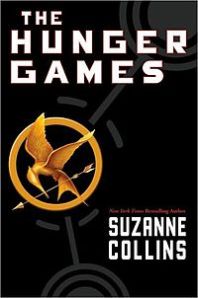
Readathon: The Hunger Games, by Suzanne Collins

Hunger_gamesThis is another of my dystopias. North America was destroyed by an ambiguous series of climate-related events, and a new country, Panem, emerged. Panem formed a Capitol in the Rockies, with 13 surrounding districts. When the districts rose up in rebellion – the Capitol always had more money and resources – the Capitol beat them back and destroyed the 13th district. Every year, the event is “celebrated” by the Hunger Games. Two children, one boy and one girl, aged 12-18, are chosen from each district to participate. They are thrown into an arena for weeks at a time, and must battle each other to the death. Last person standing is crowned champion, and they and their district is showered with food and gifts and money for a year. The Hunger Games are broadcast to everyone in Panem, all of whom are required to watch and “celebrate.” It’s reality TV turned deadly.

Katniss Everdeen knows how to survive. She’s been taking care of her mother and little sister for years. When her sister is unexpectedly chosen to participate in the Hunger Games, Katniss volunteers in her place. Though the participants from her district (12) are usually disregarded, Katniss makes herself a contender in the games. As she battles on, she learns more than just how to survive. She learns the cost of life, death, and love. She learns about unfairness, and how to subtly fight against the system, despite the costs.

There are a whole host of things laid out in this simply written YA book. Much of it deals with death and survival, the difference between killing in self defense, for revenge, or for glory. The definition of murder. Who is responsible for these deaths. One of the most poignant phrases comes near the beginning of the book, as Katniss discusses the Games in terms of hunting:

The awful thing is that if I can forget they’re people, it will be no different [from hunting] at all.

This isn’t a gory book, but it is violent. Sort of on the same level as Lord of the Flies. It involves children being forced to hunt and murder each other. It’s a gruesome subject, and yet, Collins pulls it off fabulously. She doesn’t linger over the deaths, and there is real sadness involved. The outrage is all for the Capitol and their manipulations. Every page that passes, you want the country destroyed even more for their crimes against humanity. At the same time, you feel the hopelessness of rebellion. The people in the districts simply don’t have the resources to fight.

The ending is appropriately mixed. While the climax has passed, pain, confusion, and uncertainty remain waiting for the sequel. I read one review that said they’d prefer the book to end here, without a sequel, and I can see the merit in that. It ends so perfectly, so realistically, that no real sequel is needed. However, when the second book comes out next fall, I know I will be scooping it up as fast as possible. I can’t wait to delve back into this world and see how things will go next. But I’m not dying for the next book as some seem to do when they’re finished.

This is a great book. One of my favorite reads of the year so far. It’s YA, and the main characters are 16, but it transcends the age group. The thematic elements are every bit as appropriate for adults – perhaps more, for the warning notes laid out here. A society like this could happen all too easily in my opinion. Especially with our current detached attitude about the horrors in the world that come through our TVs. Nothing is real to us anymore. It says so much when we hear the stylists discussing the Games:

It’s funny, because even though they’re rattling on about the Games, it’s all about where they were or what they were doing or how they felt when a specific event occurred. “I was still in bed!” “I had just had my eyebrows dyed!” “I swear I nearly fainted!” Everything is about them, not the dying boys and girls in the arena.

How many people view reality TV or even catastrophes in the news with that same sort of detachment? How many have gone numb to the horrors of the world, accepting it with hardly a grimace anymore?

Revisited summer 2010: [Spoilers] This is my fourth read of The Hunger Games. I read it first for readathon in April ’09, right in the middle of the night, so I read it a second time that week to make sure I remembered all the details properly. I then reread it closer to the Catching Fire release in 2009.

Fourth time through, I love this book just as much as I loved it the first three. The same sections made me cry, especially when District 11 sends the bread to Katniss and she thanks them aloud. That’s when my grief for Rue swells up and spills out. I love that the book is in present tense but doesn’t feel awkward. I love that even in all the violence and pain, nothing feels gratuitous or written for shock.

Most of all, I love Katniss. She is so strong, so brave, so determined, and yet at the same time, because she’s been forced to focus her vision into the tunnel of survival, she’s so blind. It’s the perfect character flaw. Her blindness makes her endearing, and makes me want to root for her. I love that in everything she does, she never realizes that those around her aren’t just like her. That not everyone is playing a game or planning a strategy. She expects them to behave the same way she does, because to her, that’s what survival is all about. Those who have a strategy and a plan, she understands. Those who are selfless, like Peeta, she misjudges. It’s the perfect balance.

I can’t sing this book’s praises enough. Even after four times, it’s just as wonderful.

Mockingjay

I have no expectations for Mockingjay, really, though I have this small hope that I’ll find out Cinna is still alive, even if he’s had his tongue cut out. This series isn’t like with Harry Potter, where I spent hours trying to figure out what was going to happen in the next book. I’ve never tried to look forward. Instead, I’m just looking forward to the ride! The only thing that I hope will be resolved is the love triangle.

Peeta vs Gale

This, of course, is the big war going on all over the blogosphere. Which boy will Katniss end up with, Peeta or Gale? People who love Peeta are adamantly anti-Gale, and vice versa, so I thought I’d give my thoughts on the two boys.

[fyi I wrote this whole part of the post prior to rereading Catching Fire. My feelings against Gale have intensified since then, but are essentially the same.]

Peeta: He’s kind, thoughtful, protective, and desperately in love with Katniss. Some people see him as manipulative, but I disagree with that. I tried to read that into his character during my fourth read of the first book, and I just can’t. Everything he does is not for his own survival, but for hers.

Having said that, I don’t think he deserves Katniss. Don’t get me wrong – I love Katniss, but she has never been able to separate out in her head the strategy she thought Peeta was using and the truth about his feelings. Their love-act is completely wrapped up in the games, something she would rather forget. They would have been good together under other circumstances. His kindness and gentleness would be a perfect compliment to her toughness and intensity. But not when they were thrown in together that way.

Gale: He’s a lot like Katniss – angry, stubborn, foolhardy, focused, and the consummate survivor. The two have known each other for years and have become so close as hunting partners that they can almost read each other’s minds. Gale is also jealous, possessive, controlling, and judgmental. I get the impression that if Katniss chooses someone other than him, he’ll refuse to ever have anything to do with her again, and to me, that is not love. I don’t believe Gale loves her at all. He wants her, but he doesn’t love her.

Gale is far more like a sibling than he is like a boyfriend, and if he and Katniss were to get together, their relationship would be a disaster. They are both too stubborn and alike. No one would give, and the relationship – and therefore the friendship – would rip into shreds. Furthermore, anyone who acts that jealous and possessive towards another person is someone I regard as dangerous. I could easily see Gale turning into a wife-beater in the future. He and Katniss would be better off remaining friends, assuming he would even deign to be her friend if she chooses someone else.

Comparison: The difference between the two guys to me is this: Gale would protect Katniss only if he knows she will stay with him, whereas Peeta would protect her no matter what. Gale thinks about himself more than he thinks about Katniss. Peeta always thinks of Katniss first. His love for her is unconditional, which is the only kind of love that’s worth having.

But even saying that, I don’t think Katniss should end up with Peeta. If she has to end up with one of them, I’d much prefer Peeta over Gale. But Katniss has been very clear through both books on this subject: she doesn’t want to get into a relationship. She definitely doesn’t want to get married and have kids! I hope so much that Katniss sticks with this decision in Mockingjay. The wavering in Catching Fire drove me crazy because Katniss has made it clear she’s not in love with either guy. She regards Gale as her brother, and his romantic feelings toward her confuse her. Her relationship with Peeta is all mixed up with the games and is very confusing as well. What Katniss needs is to grow up and be alone, unless and until she meets someone who makes her change her mind about marriage. Neither Gale nor Peeta can do that.

I am 100% Team Katniss!

Posted in 2009, 2010, Prose, Young Adult | Tagged , , , , , , , | 7 Comments

The Sea of Monsters, by Rick Riordan

225px-PercySeamonstersThis is book two of the Percy Jackson series. I read The Lightning Thief in February, and am just now getting to the first sequel of the series (with my son’s encouragement). In this book, which starts the summer after the last one ended, Percy is all set to go back to Camp Half-Blood for the summer, only to find out that camp is no longer safe. Someone has poisoned the boundaries, and monsters are now able to get into that safe haven. Percy gets roped into going after a solution to the problem (the Golden Fleece) even though this year it’s not technically his quest.

Maybe it’s because I had a bad cold while I was reading it, but I didn’t enjoy this book as much as the first one. It didn’t feel as cleverly put together as the last. I didn’t catch as much of the humor, either because it wasn’t there or because the mythology was more obscure (hence, out of my knowledge base) and I therefore didn’t see the jokes. Either way, there was a lot less laughing through this one. Also, the plot was more predictable, and the whole setup has become very Harry Potter in feel. I mean, the first one sounded a lot like HP, too, but like it was trying to branch into its own area. This one felt a lot more copied, especially in the new overarching plot for the series – Percy vs. big-time bad guy Kronos and his minions. It has VOLDEMORT written all over it. Couple that with Percy’s half-brother, a cyclops, who could almost have passed for Hagrid, and I got a little annoyed.

The Sea of Monsters suffered a lot of first-sequel problems, not the least of which was having to explain the backstory of the first book within the first couple chapters of this one. I don’t like backstory explanation. I feel like for the most part, if you’re writing a sequel, make it standalone-enough that if a reader wants backstory, they can go to the first book! But, I understand why authors do it. It just annoys me. It also spent a long time setting up this overarching series problem, the Percy vs. Kronos, and had to be careful to make it mesh with the first book. With a first book, you don’t always know if you’ll be able to have a second book, so The Lightning Thief was very self-contained. It didn’t need a sequel. But now that there are sequels, the overarching plot must apply to all the books, including the first, so there was a certain amount of weaving things back and forth which got a little irritating. I am glad, however, that a series-level plot has been established. That always makes a series better.

It wasn’t all bad or anything. I liked a lot of it. It was fun and easy to read. It just didn’t live up to the first book for me.

Posted in 2009, Children's, Prose | Tagged , | 3 Comments

Mansfield Park, by Jane Austen

mansfield parkIt would be nearly impossible for me to try to describe the plot of this book without spoilers, so I’m not going to describe it at all. It’s an Austen novel. It goes without saying there will be a romance that isn’t resolved until the very end, that it will be resolved favorably, and along the way there will be lots of social commentary. However, I thought this book focused a lot less on romance and a lot more on human nature, class structure, and the contrast of good vs. the appearance of good.

I’ve read four Austen novels before this one – Persuasion, Emma, Sense and Sensibility, and Pride and Prejudice. While I liked P&P the most of those, I thought all four of these books were very similar. There was always at least a few evil characters, and a few characters who were continuously ribbed on as comic relief. There were generally bad or silly parents, and misunderstandings in love. Mansfield Park starts out that way, for the first chapter or two, but very quickly takes a different path. A more realistic-feeling path, in my opinion, with more well-developed characters who don’t fit into “good” or “bad” so easily. There are, in fact, few characters that I can say fit into either of those categories, and no one is so easily caricatured. Character-wise, I think this has been the best Austen work I’ve read, though I admit that it was slow (especially the first 75 pages or so) and not as interesting to me as P&P was.

Fanny Price is the heroine of this book, and is very unlike many of the other heroines in Austen’s novels. She is quiet, painfully shy, physically weak, not at all forceful, and slightly neglected by her adoptive family. She lives with her aunt and uncle, as her own parents are poor and have, in total, 10 children (all born within 11-12 years). Her female cousins treat her slightly contemptuously, though they are more neglectful than mean, and her aunts pretty much just use her as a servant. Fanny never complains – in fact, she hardly says a word the whole book – which really would have gotten to me after awhile (I’m not a huge fan of doormat heroes…) except that internally, she proved to be very strong. When presented with an unwanted proposal from a man she can’t respect, she refuses him despite all his encouragement, her uncle’s anger and lectures, her beloved cousin’s censure, and her friends’ pleas. Nothing anyone can say or do will induce her to belong to a man she can’t agree with, and this takes strength of character that I don’t know if I would have expected in someone like Fanny.

There were two things I really enjoyed in this book. First was the contrast of Fanny’s home at Mansfield Park, with her aunt and uncle, to her parents’ home. She goes to her parents’ home after being away for nearly a decade, and what she finds is not at all what she expected. She has so many siblings, all so close together in age, and they are completely unmanageable, noisy, and living in this cramped house. The servants are awful, the food is ill-prepared, everything is dirty, and her mother has basically given up. I understand Fanny’s feelings all too well. It’s hard to go back to a place and expect one thing, from memory, and receive something totally different. It’s a complete shock. Especially if it’s a place you haven’t seen since childhood. But furthermore, Fanny’s sensibilities are offended by the lack of restraint in her siblings. They are wild. They are undisciplined. Personally, it takes me time to adjust in any house where kids are running around without regards to their parents. I come from a very disciplined home, and run mine in the same fashion. While I understand that people raise their children in different ways, and some feel it’s important for kids to have huge amounts of freedom when they’re young, I become completely stressed out in that type of situation. I just want to take everyone in hand and make them behave! I don’t, of course, but it’s hard to resist the temptation, especially when parents just say, oh, they can’t do anything about it, they don’t have enough energy/authority/etc to do anything about it. Now granted, if I had 10 kids in 11 years, I’d probably be the same way (more likely I’d be in a mental institute), but still it was jarring enough just to read about! Austen did very well with those scenes. I was as much in horror of Fanny’s family’s home as Fanny was.

The other thing that really struck me in this book was the contrast of good vs. the appearance of good. While no character was really evil, there were characters more influenced by the world, and who thought about morality in a different way than Austen seems to think. She gave them more credit in this book, though, than she has done in previous books I’ve read. When a married woman runs off with an ex-lover, their siblings talk about the evil that’s been done. One sibling feels the crime is the deed itself, the other feels the crime is that the deed was discovered. Very different viewpoints. One sibling cared about the inherent break in morality, decency, and propriety in the elopement, whereas the other is only concerned with how people will see the event, and how quickly appearances can be mended. It sounds shallow, but this second sibling, concerned with appearances, is not treated the way I would have expected Austen to treat such shallowness. That sibling is given depth – ignorance about morality rather than defiance of it. She is doing the best she can in the only way she knows how, and while it’s clear Austen thinks she’s wrong, she’s not vilified. I like that. It’s a change from other Austen books. And it feels more honest to me.

Mansfield Park is not my favorite Austen novel, but I do think it has a lot more depth and true character development than the others (thus far). Once I got past the slow beginning, I really enjoyed it.

Posted in 2009, Adult, Prose | Tagged | 2 Comments

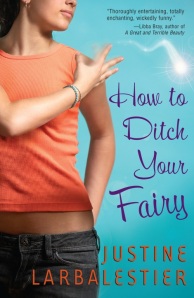
How to Ditch Your Fairy, by Justine Larbalestier

How_to_Ditch_Your_FairyThe basic lesson learned in this book is to be careful what you wish for. It’s a simple lesson, much simpler than I was expecting, actually. This is categorized at my library as young adult, but it felt much more like middle grade fiction. When I first began reading, I wasn’t sure if I would continue. It was a little too young, a little too girly, and the mass download of fictional vocabulary tripped me up (I didn’t realize there was a glossary in the back). I almost quit after the first chapter, but decided to read at least the first three before deciding. After the third, while it never crossed over into the territory of wonderful for me, I did end up enjoying it. It kept me wanting to read.

I do think more could have been done with it. There were a couple times in the book where I felt like we were going to learn that the city was evil in some way, that Charlie was going to leave and discover that most of her world was a construct. That would have been interesting. But those parts seemed to lead no where by the end. There was also a lot of hanging points regarding one of the side characters. It actually is a decent set up for a good sequel, but I don’t know if one is in the works or not.

The back of the book quotes Maureen Johnson (one of the YA authors quickly rising into my favorites) as saying, “…after reading this book, you will know what kind [of fairy] you have.” There’s a list of fairies in the back of the book, most of which are used in the story, but when I read through them, I came across one that struck me – the good story fairy: “When writers have this fairy, they always get great ideas–which is not that fabulous given that writing the good ideas is the hard part, not getting them.” Maybe Johnson is right. Maybe I do know now what my fairy is…

Posted in 2009, Prose, Young Adult | Tagged | 1 Comment