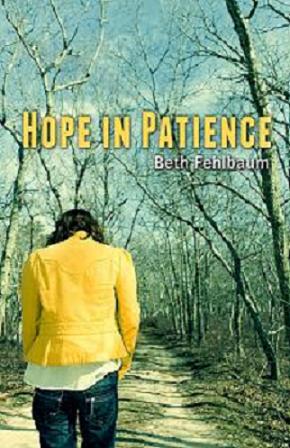
 For years, Ashley was molested by her stepfather, but after she has the courage to tell someone what has happened to her, the worst happens: her mother and grandparents abandon her, claiming she is lying. She is placed with her biological father, who she has never known, and is now trying to find a way to survive and overcome her past.
This was an extremely powerful book, and not at all easy to read. The stuff that Ashley suffers through is brutal. Not just the molestation and rape from her stepfather, but what she suffers at the hands of everyone else because of her story: the things her mother accuses her of doing, the way she’s treated by teachers and classmates, what happens to her in court when she tries to stand up to her stepfather. It’s awful and it broke my heart.
This is such a sensitive topic and I think Fehlbaum handled it fairly well. She didn’t take the easy road out. People flat-out didn’t understand Ashley and what she’s been through. They prefer to think of her as a melodramatic or dishonest teenager rather than to believe all the stuff she’s been through. So often this happens to people who suffer from abuse. They are subjected to shaming, doubt, and bullying by others, and this book explores all those different avenues. Thankfully it also talks about all the people who react in a positive and helpful way to this situation, who try to help Ashley in every way they can.
Hope in Patience also didn’t take the easy way when it came to relationships and the way people interacted either. In so many YA novels where school conflicts are a major subject, by the end everyone comes to an understanding of each other. They may not like each other, but they see each other more clearly. Not so in this case. The fundamentalist Christians still hate Ashley’s lesbian friend K.C. and refuse to have anything to do with her. The patriotic and uber-conservative history teacher still intimidates his students by scare tactics and sometimes force. Ashley’s mom never comes around to Ashley’s side. All these things are so much more real than what I normally see in books, even if they are less hopeful as well, and I appreciated that.
My issue with this book was that some of the writing felt a little clunky, particularly when it came to modern cultural references. For example, there was one point where the author explained what Chuck E. Cheese was, and another place where she described the banana-orange knock-knock joke in great detail. It seemed odd to think either of those references needed explanation. I guess I just think of those things as fairly common American culture references. Maybe I’m wrong? Perhaps I’m just familiar with them being from Texas myself? Periodically I would be thrown off by a reference like that, or a few references to politics that seemed to too narrowly tie the time period down. But other than those little moments, the book was interesting and readable.
Note: The author had a meltdown about my quibbles in the comment section of my original review, despite what I thought was a kind review for a book I didn’t particularly enjoy. After her tantrum, I feel no need to continue to be nice, and I definitely won’t read more by her.